
5 minutes read
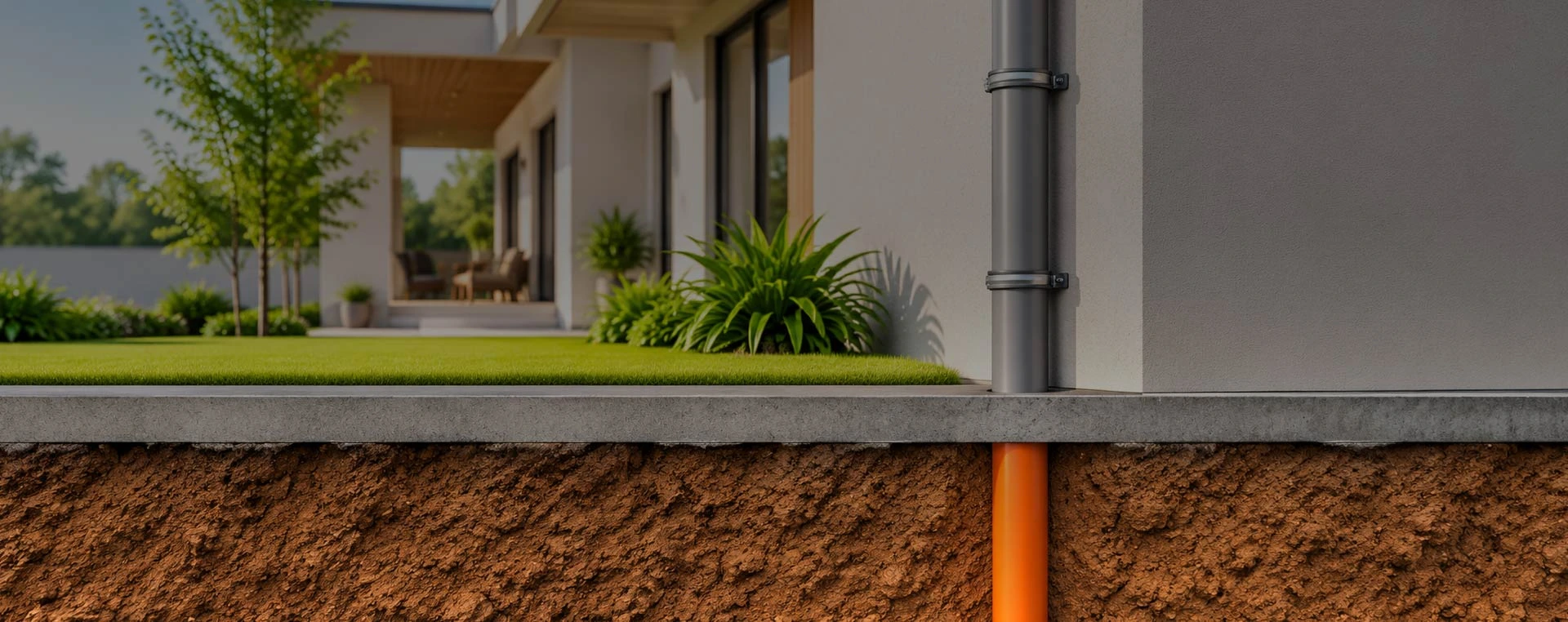
A drainage failure rarely announces itself. It begins as a small leak at a joint, a slow blockage or a sagging line, and ends as foul odours, damp walls or a costly excavation. Because drainage pipelines are often buried or hidden in shafts, problems are hard to reach once they appear. Choosing the right drainage pipes and fittings at the start is the most reliable way to avoid them. This guide explains the most common failures and how BirlaNu SWR and UGD pipes address each one.
|
Failure |
Typical cause |
How BirlaNu helps |
|
Leaking joints and infiltration |
Poor seals, careless installation, ground movement |
Rubber-ring joints with TruFiT Technology |
|
Root intrusion |
Roots enter through any open or imperfect joint |
Leakproof joints close the gaps roots exploit |
|
Crushing and deformation |
Soil weight, traffic loads, poor bedding |
SN2, SN4 and SN8 stiffness classes |
|
Blockage and poor flow |
Rough bores, scale, incorrect gradients |
Smooth inner surface for high flow rate |
Older rigid materials such as concrete and clay are brittle, so they crack with ground movement, and their interiors can corrode from sulphuric acid generated by sewage. Defective joints also let groundwater in, which overloads the system and gradually disturbs the soil around the pipe.
BirlaNu SWR pipes for soil, waste and rainwater
SWR stands for soil, waste and rainwater. BirlaNu SWR pipes handle drainage inside and around residential, commercial and industrial buildings, including multi-storey drainage and industrial waste disposal.
Buried lines face the toughest conditions, with soil weight, traffic and constant moisture. BirlaNu UGD pipes for underground drainage are made for sewerage, wastewater management, stormwater drainage and industrial waste disposal. They conform to IS 15328:2003, which covers non-pressure gravity systems, and are flexible enough to install in varied ground conditions.
Ring stiffness is the key selection factor. SN2, SN4 and SN8 correspond to minimum ring stiffness of 2, 4 and 8 kN/m². As a general guide, SN4 suits light traffic and shallow burial, while SN8 suits heavy traffic and deeper burial. The designer should confirm the class against burial depth, soil and loading.
|
Product |
Sizes |
Standard |
|
SWR pipes |
40 mm to 160 mm, Type A and B |
IS 13592:2013 |
|
SWR fittings |
75 mm to 160 mm |
IS 14735:1999 |
|
UGD pipes |
63 mm to 315 mm, SN2, SN4 and SN8 |
IS 15328:2003 |
|
UGD fittings |
110 mm to 200 mm |
Matching system |
The wider range also includes Silent pipes for low-noise drainage, Foamcore pipes for lightweight underground drainage and Rainwater pipes for rainwater management.
Drainage pipelines fail where they are least visible, usually at the joints, under heavy loads or through slow chemical damage. Preventing these problems is far easier at the design stage than after excavation. BirlaNu SWR pipes keep soil, waste and rainwater lines tight inside and around buildings, while UGD pipes offer SN2, SN4 and SN8 options for different burial and load conditions. With TruFiT Technology, rubber-ring joints and matching fittings, the system works as one leakproof network. Explore the full range at birlanu.com/pipes/plumbing-sanitation and build drainage that lasts.
What does SWR stand for in drainage pipes?
SWR stands for soil, waste and rainwater. These pipes carry wastewater and rainwater in buildings. Type A suits ventilation and rainwater lines, while Type B suits soil and waste discharge.
What is the difference between SWR and UGD pipes?
SWR pipes serve drainage inside and around buildings in sizes from 40 mm to 160 mm. UGD pipes are buried for sewerage and stormwater and come in 63 mm to 315 mm with ring stiffness classes.
Which SN class should I choose for underground drainage pipes?
SN4 generally suits light traffic and shallow burial, while SN8 suits heavy traffic and deeper burial. SN2 is for lighter loads. The designer should confirm the class against soil, depth and loading.
How do BirlaNu drainage pipes prevent leaks?
BirlaNu SWR and UGD pipes use rubber ring joints and TruFiT Technology to create leakproof connections. Correct installation, matching fittings and proper bedding are still essential for long-term performance.
Can BirlaNu SWR pipes be used outdoors?
Yes. UV-resistant SWR variants are available for outdoor use, and the pipes resist chlorine, alkali, acids and alcohols. Choose Type A or Type B according to whether the line carries rainwater or soil and waste.
The latest
Everything you need to choose, compare and install asbestos-free roofing for homes, farms and factories
17/11/2026
5 minutes read
Match the primer to the wall’s location, exposure and condition for paint that sticks, looks even and lasts.
17/11/2026
4 minutes read
Choose the right putty for every wall and apply it the right way for a smooth, lasting paint finish.
16/11/2026
5 minutes read
Everything you need to choose, compare and install asbestos-free roofing for homes, farms and factories
- - 17/11/2026
Match the primer to the wall’s location, exposure and condition for paint that sticks, looks even and lasts.
- - 17/11/2026
Choose the right putty for every wall and apply it the right way for a smooth, lasting paint finish.
- - 16/11/2026
Compare flexibility, jointing, cost and installation to choose the right pipe from borewell to field
- - 10/11/2026
