

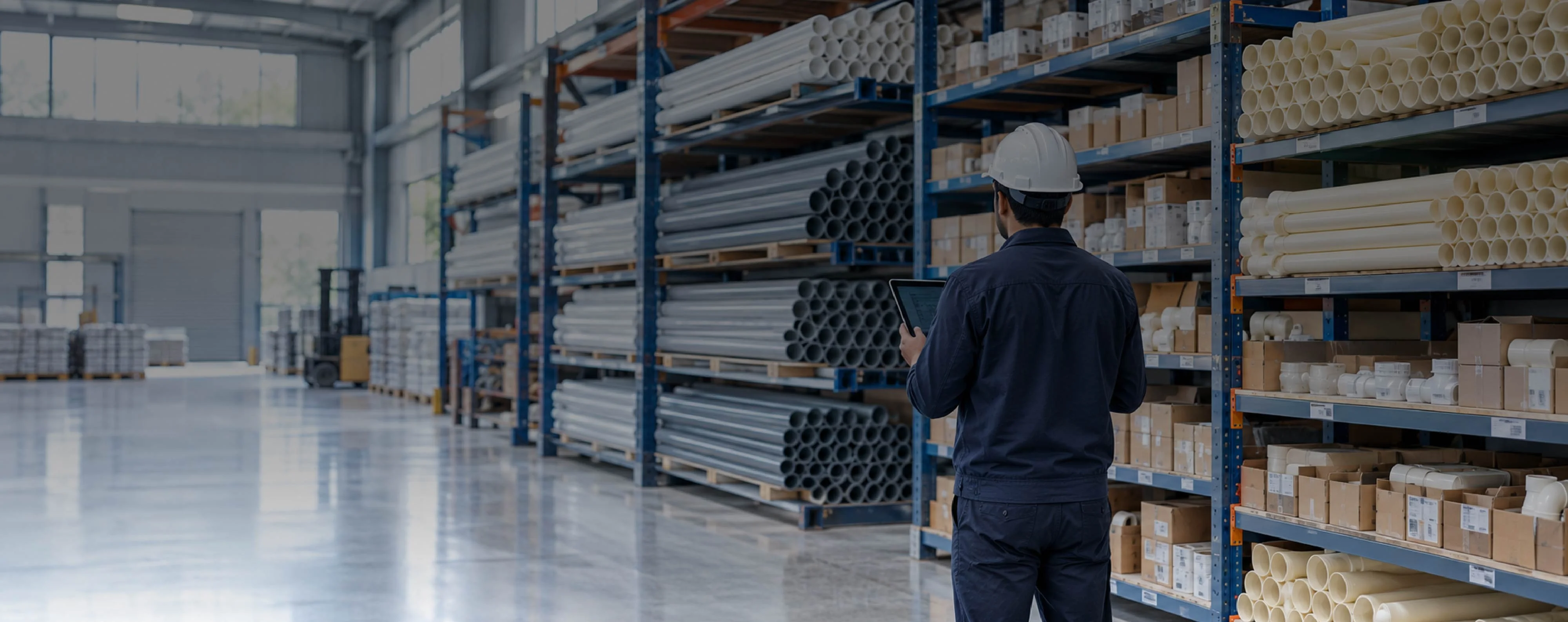
10 minutes read
A pipe may look like a fairly straightforward purchase on a project estimate. The consequences of choosing the wrong one, however, can show up much later. A leaking connection might mean opening up a finished wall. A pipe that fails to meet the required specifications can delay an inspection. And if the right size or fitting isn't available when the installation team needs it, even routine work can grind to a halt.
These problems are not always caused by poor-quality pipes. Sometimes, the product wasn't suited to the application in the first place. In other cases, the manufacturer offered little documentation, inconsistent specifications or unreliable supply. By the time any of this becomes apparent, changing suppliers can be expensive and inconvenient.
Choosing a pipe manufacturer, then, involves more than comparing prices or picking a familiar brand. The material needs to suit the job, the product must meet the relevant standards, and the manufacturer should be able to supply the required range consistently.
India has no shortage of pipe manufacturers, which makes the choice harder rather than easier. A useful starting point is to understand what each type of pipe is designed to do. From there, it becomes easier to judge which manufacturers are worth considering.
uPVC vs CPVC vs HDPE: Which pipe is right for the job?
The choice between uPVC, CPVC and HDPE comes down to the job the pipe needs to do. They are not interchangeable, and choosing between them on price alone can lead to problems later. Water temperature, pressure requirements and installation conditions all have a bearing on the decision.
|
Comparison |
uPVC |
CPVC |
HDPE |
|
Common applications |
Cold-water plumbing and water supply |
Hot- and cold-water plumbing |
Water distribution and irrigation |
|
Temperature suitability |
Generally suited to cold water |
Suitable for hot and cold water within specified limits |
Depends on the product and application |
|
What to check |
Pressure rating and applicable standard |
Temperature and pressure limits |
Pressure class and joining method |
|
Key consideration |
Suitability for the intended water supply system |
Performance under operating temperatures |
Installation requirements and jointing |
For household plumbing, uPVC is commonly used for cold-water lines, while CPVC is an option for systems that carry hot water. HDPE is frequently used in irrigation and water distribution networks, where flexibility and resistance to corrosion can be useful.
The final choice should always follow the project's specifications. Check the relevant product standard, pressure rating and operating conditions before deciding. A manufacturer's catalogue can help narrow the options, but the technical details of the specific product should determine whether it is suitable.
1. BIS/IS certification and compliance
Start with the applicable Indian Standard. For uPVC pressure pipes used for potable water supplies, IS 4985:2021 covers requirements such as dimensions, mechanical properties, testing and marking.
An ISI mark alone shouldn't end the conversation. Check which standard applies to the specific product and whether the manufacturer can provide the relevant certification and documentation.
BirlaNu's pressure pipes conform to IS 4985:2021, while its corresponding fittings conform to IS 7834:1987. Applicable standards are also listed across its other pipe ranges.
2. Raw material quality
What's inside the pipe matters. The resin, stabilisers and other additives used in production can affect the consistency and performance of the finished product.
Look for manufacturers that are clear about their materials and have controls in place to maintain consistency across batches. BirlaNu's uPVC range uses an organic-based stabiliser and is described as lead-free and non-toxic. The company also manufactures its own CPVC compound.
The useful question here isn't just "What material is used?" It's whether the manufacturer has control over the material throughout the production process.
3. Manufacturing and quality testing
A good product needs a good process behind it.
Look for a manufacturer that has established quality controls and tests products against the requirements relevant to their intended use. Dimensions, wall thickness and pressure performance are among the things that can matter, depending on the product.
BirlaNu's product ranges specify applicable standards and performance requirements, while its manufacturing operations include in-house CPVC compounding. These details offer some insight into how the manufacturer approaches consistency and quality control.
4. Product range and fittings
A plumbing system needs more than pipes. Check whether the manufacturer has the sizes, pressure classes and fittings your project calls for.
It also helps when compatible components are available within the same product range. That can simplify installation and make future repairs less complicated.
BirlaNu's uPVC range covers pipes from 15 mm to 150 mm, along with matching fittings, solvent cements and primers. Its wider portfolio includes uPVC, CPVC, PPR, HDPE, pressure and SWR systems, among others.
5. Application suitability
A pipe that works well for one application may not be the right choice for another.
Before buying, check what the manufacturer recommends the product for and whether those applications match your project. Residential plumbing, potable water supply, irrigation and industrial use can all have different requirements.
BirlaNu's uPVC range, for instance, is positioned for cold-water plumbing, industrial processing, corrosive-fluid transportation and swimming pools. Its pressure pipes are intended for applications including potable water supply and irrigation.
The important thing is to choose for the application, rather than simply choosing the most popular product.
6. Track record and project experience
A manufacturer's track record can tell you a little more than a product brochure can.
Look at the kinds of projects it has supplied and whether it has experience with applications and project sizes similar to yours. Case studies and project references are particularly useful here.
BirlaNu's project portfolio includes references such as AIIMS Delhi, IIIT Trichy and Pune Metro, alongside other projects.
A long list of projects isn't automatically a reason to choose a manufacturer. What matters is whether that experience is relevant to the job at hand.
7. Technical and after-sales support
The relationship with a manufacturer doesn't necessarily end when the products are delivered.
For larger projects, it is worth knowing what happens if there is a technical question, an installation issue or a product complaint. Check for technical guidance, installation support, warranty information and a clear customer-support process.
BirlaNu provides customer support through its toll-free number, email and online contact channels.
It may not be the first thing to consider when comparing quotations, but support becomes considerably more valuable when something doesn't go according to plan.
8. Distribution and product availability
Availability is easy to overlook until a particular fitting or replacement pipe is needed urgently.
Before choosing a manufacturer, check whether the products you need are readily available in your area and whether the same range can be sourced later for repairs or extensions.
BirlaNu provides an online store locator and states that its products are available through 30,000+ retail touchpoints. For a buyer, a broad network can mean fewer sourcing headaches both during installation and later on.
A few things should make a buyer pause before placing an order. Some may have a reasonable explanation, but it's worth getting clarity before the material reaches the site.
The paperwork doesn't add up. The manufacturer claims its pipes meet the relevant standards but cannot provide the certification details or technical documents to support that claim.
The price difference is hard to explain. One quotation comes in considerably lower than the others, yet there's little information about the specifications, fittings or supply terms included in the price.
Quality checks are a grey area. Questions about testing bring vague answers, and the manufacturer has no relevant reports to share.
Important specifications are missing. The quotation mentions the pipe type and size but leaves out details such as pressure rating or the intended application.
The fittings are an afterthought. The supplier quotes for pipes but cannot clearly establish whether the corresponding fittings are suitable for the system.
Delivery promises lack certainty. The supplier is unable to confirm stock, gives inconsistent delivery dates or cannot explain how repeat orders will be handled.
One warning sign may simply call for further clarification. But if a manufacturer cannot provide clear answers on basic matters such as certification, product specifications or delivery, it is worth considering other options before committing to the order.
1. How to select a uPVC pipe manufacturer in India?
Begin with the type of installation and its specifications. A manufacturer may have a large selection of pipes, but it doesn’t matter much if they don’t have the sizes, pressure ratings or fittings that are needed for the project. Check the relevant BIS certification, get the product specifications and know how the manufacturer conducts quality testing. Delivery reliability and access to technical support are also worth considering.
2. Which pipe is best for plumbing in India?
For most plumbing systems, the first distinction is between hot- and cold-water lines. uPVC is widely used for cold-water supply, whereas CPVC is suitable for hot water as well, within its rated operating conditions. HDPE is commonly used for water distribution and irrigation. The choice also depends on the layout, pressure requirements and installation conditions, so one material won't necessarily suit every part of a building.
3. What should you check when buying uPVC pipes for plumbing and water supply?
Before buying, make sure the pipes are suitable for the intended use. Check the pressure rating, size and relevant BIS standard. The fittings should also fit properly. If you're buying in bulk, ask for the product specifications and test reports. It's also worth checking whether the supplier can provide the same pipes and fittings whenever you need them.
4. What makes a manufacturer the best uPVC pipe manufacturer in India?
There isn't a single feature that settles the question. A manufacturer may have a broad product range, but the more useful test is whether its products meet the required standards and whether the company can supply the sizes and quantities a project needs. Relevant project experience, accessible technical documentation and dependable supply arrangements help complete the picture. The decision should be based on the requirements of the installation, not brand recognition alone.
5. What should you look for in a pipe supplier in India?
The role of a supplier doesn’t end at providing a quotation. Verify that the required pipes and fittings are in stock, how long delivery will take and if additional quantities can be arranged if the project overruns the schedule. It’s also useful to clarify how you will deal with product issues. Compare prices and make sure the quotations are for the same specifications, quantities and delivery terms.
6. Which are the best plumbing pipe brands in India?
There are several brands of plumbing pipes available in India, but the right choice depends on the project requirement. Some pipes are designed for cold-water supply, while others are suitable for hot-water systems. Compare the specifications, quality standards and fittings available before you choose a brand. For example, BirlaNu offers uPVC, CPVC and HDPE pipes for varied applications. Check out the product details to see which one is right for your plumbing needs.
Choosing a pipe manufacturer takes a little more work than collecting quotations, but it needn't become a complicated exercise. Compare your shortlisted options carefully and clear up any doubts before placing an order. A little care at this stage can save considerable trouble once the work begins.
For buyers exploring uPVC pipe manufacturers in India, BirlaNu offers a range of uPVC, CPVC and HDPE piping solutions.
To discuss your project requirements and find a suitable option, talk to a BirlaNu expert.
The latest
Why the smallest roofing components decide whether a roof stays dry, secure and durable for years.
12/10/2026
6 minutes read

Explore how different roofing materials perform across India’s heat, humidity and monsoons
11/10/2026
7 minutes read
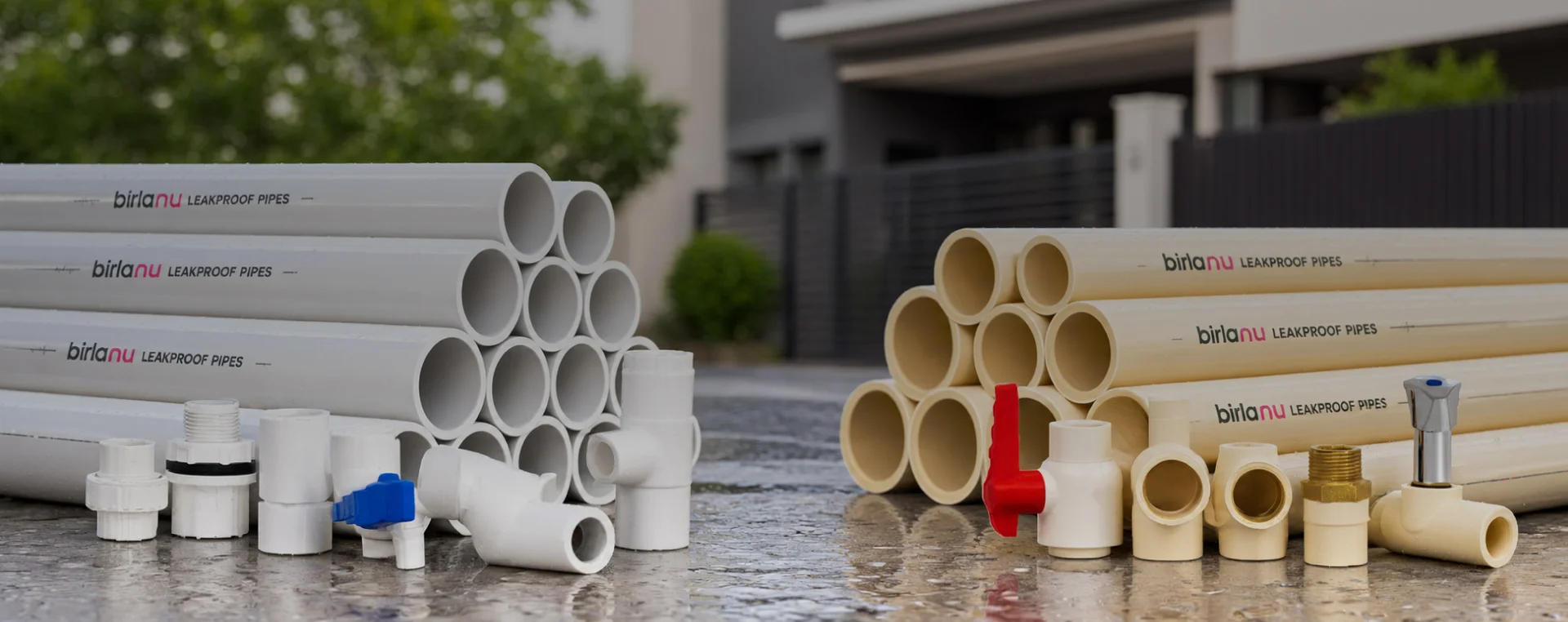
Choose the right pipes and fittings for reliable water supply and drainage.
07/10/2026
7 minutes read
Why the smallest roofing components decide whether a roof stays dry, secure and durable for years.
- - 12/10/2026
Explore how different roofing materials perform across India’s heat, humidity and monsoons
- - 11/10/2026
Choose the right pipes and fittings for reliable water supply and drainage.
- - 07/10/2026

Understanding why AAC blocks are a strong and efficient choice for multi-storey buildings
- - 10/09/2026
