Key takeaways
- UPVC works best for cold water supply lines, ring mains and other applications where heat resistance is not a factor
- A CPVC pipe is built to handle both hot and cold water, making it the right choice for geysers, solar heating and similar setups
- Many homes use both systems together, running uPVC for cold lines and CPVC pipe for hot lines within the same plumbing pipe network
- Drainage needs are different from supply lines, so SWR pipes should be chosen separately with proper jointing to avoid leaks
- Fittings matter as much as the pipes themselves, so always check certification, pressure rating and manufacturer compatibility before buying
- BirlaNu offers both uPVC and CPVC pipes and fittings, built with TruFiT Technology for a leakproof fit across the entire system
Picking the right pipes for your home or project is not something to rush. A wrong choice can mean leaks, corrosion or a system that simply cannot handle the pressure and temperature it is put under. Whether you are setting up a new water supply line, planning drainage or upgrading an old plumbing pipe network, understanding your material options makes all the difference to how long the system lasts and how well it performs.
Among the many piping materials available today, uPVC and CPVC have become the go-to choices for most residential and commercial plumbing needs in India. Both are reliable, both are widely used and both come with their own strengths. This guide breaks down what each one does best, so you can choose with confidence.
What is uPVC and where does it work best
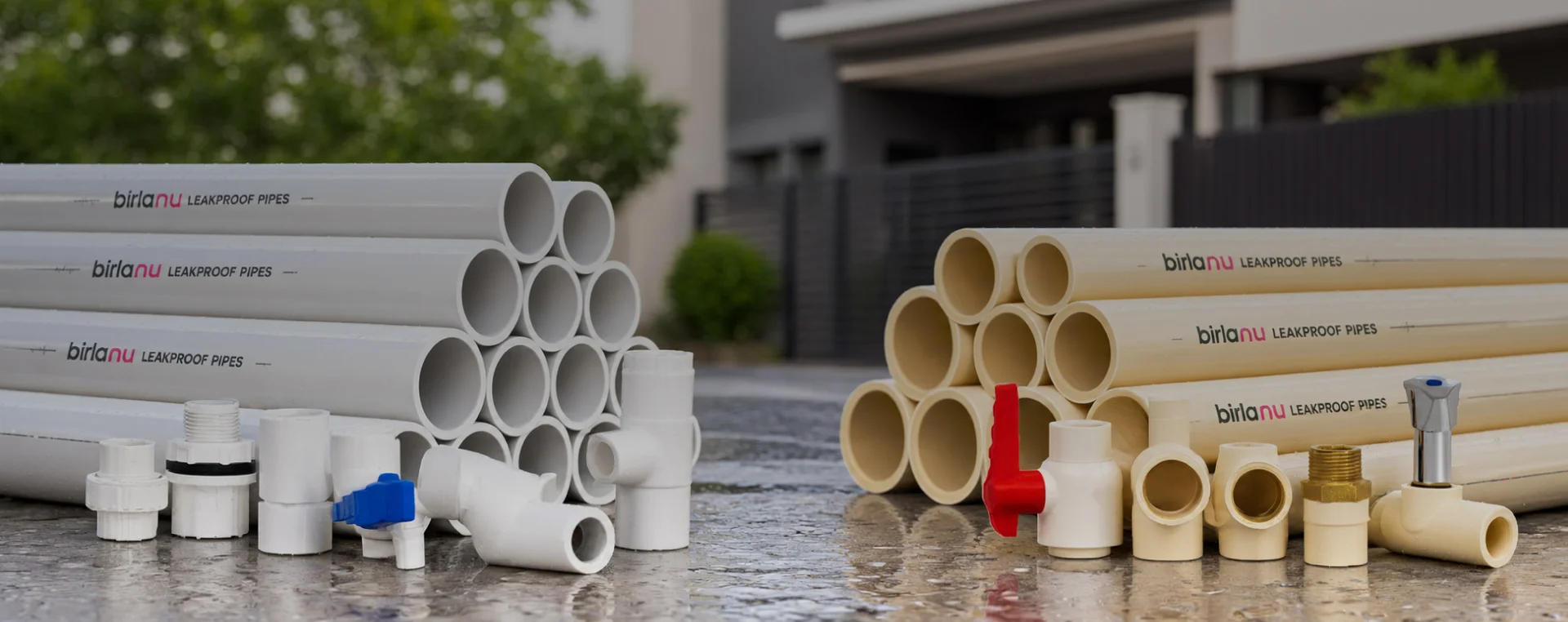
uPVC stands for unplasticized polyvinyl chloride. Unlike standard PVC, it contains no plasticizers, which makes it rigid, strong and highly resistant to chemical corrosion. This is why uPVC has become a preferred choice for cold water applications across homes, apartments and industrial setups.
Its low thermal conductivity keeps water at a stable temperature, while its smooth inner surface prevents scaling and algae build-up over time. UPVC pipes are also lightweight, easy to install and do not need heavy tools or electricity for fitting work, which makes them a practical choice for plumbers working on tight timelines.
Common uses of uPVC pipes include:
- Cold water supply lines in residential and commercial buildings
- Ring mains in apartment complexes
- Swimming pool circulation systems
- Handling corrosive fluids in industrial settings
BirlaNu's uPVC pipes and fittings are built specifically for cold potable water applications, with TruFiT Technology ensuring a leakproof fit between pipes and fittings at every joint. You can explore the full range at https://birlanu.com/pipes
Understanding CPVC pipe systems
A CPVC pipe is made from chlorinated polyvinyl chloride, a material engineered to handle both hot and cold water with ease. The added chlorination process gives CPVC pipe systems a much higher heat tolerance compared to standard uPVC, which is why they are the preferred choice wherever hot water is part of the plumbing setup.
CPVC pipe and fittings are commonly used in homes, hotels, hospitals and solar water heating systems, where consistent performance under heat and pressure is essential. Good quality CPVC can typically withstand temperatures up to 95 degrees Celsius and considerable pressure loads, which makes it suitable even for complex, multi-storey installations.
Beyond temperature resistance, a well-made CPVC pipe also needs to be lead-free and food-grade, so that it remains safe for potable water delivery without affecting taste or hygiene.
Key advantages of CPVC pipe systems include:
- Suitable for both hot and cold-water applications
- High resistance to scaling, corrosion and fire
- Long service life even under continuous heat exposure
- Compatibility with brass fittings for added strength
BirlaNu's CPVC range is developed using a patented in-house compound, giving complete control over formulation and stability. This is what allows the pipes to perform reliably under high temperature and pressure, whether in a modular kitchen or an industrial facility.
UPVC or CPVC: how to decide
The simplest way to decide between the two comes down to one question: will the line carry hot water or only cold water?
If you are laying a cold water supply line, uPVC is the more economical and equally durable option. If any part of the system will carry hot water, such as geyser connections or solar heating setups, CPVC pipe fittings are the safer and more heat-resistant choice.
Many homes end up using both. Cold water lines run on uPVC, while hot water lines run on CPVC, giving you a complete plumbing pipe system that is matched to the exact job each section needs to do.
Choosing pipes for drainage
Drainage is a different requirement altogether, and it is worth planning for separately from your water supply lines. Soil, waste and rainwater discharge need pipes designed for smooth flow and long-term durability rather than pressure resistance. SWR (soil, waste and rain) pipes are purpose-built for this, and pairing them with proper jointing technology reduces the risk of blockages and leaks at connection points, which is often where drainage systems fail first.
What to check before you buy plumbing pipe and fittings
A pipe is only as good as its weakest joint, so fittings deserve as much attention as the pipes themselves. Before you finalise any plumbing pipe and fitting purchase, keep the following in mind:
- Check for ISI or equivalent quality certification
- Make sure pipes and fittings come from the same manufacturer for a precise fit
- Look for UV stabilisation if pipes will be exposed to sunlight
- Confirm the pressure and temperature rating matches your application
- Choose brands that offer solvent cement and jointing solutions designed for their own pipes
Why BirlaNu is a trusted choice
BirlaNu offers both uPVC and CPVC pipes and fittings within one dependable lineup, along with SWR, silent and underground drainage solutions for complete plumbing and sanitation needs. Every product is built around TruFiT Technology, which reduces the gap between pipes and fittings for a genuinely leakproof joint, and BirlaNu remains the first and only brand in India to offer this innovation.
Whether you need a CPVC pipe for a hot water line or uPVC for cold water supply, choosing a single trusted manufacturer for your entire plumbing pipe network means fewer compatibility issues and a system built to last. You can browse the complete range of pipes and fittings at birlanu.com/pipes.
FAQs
Should I use CPVC for both hot and cold-water lines in my home?
CPVC can be used for both hot and cold-water supply, which is why it is commonly used for indoor plumbing systems where both types of water lines are required. Alternatively, uPVC can be used for cold water applications while CPVC is used for hot water lines.
Which pipe is better for a bathroom: uPVC or CPVC?
It depends on the plumbing line. For cold water supply to a bathroom, uPVC can be suitable when the product is specified for that application. For hot water from a geyser or solar water heater, CPVC is designed for the higher temperatures involved.
What type of pipe should be used for bathroom drainage?
Bathroom drainage should use a pipe system designed for soil, waste and discharge applications, such as SWR pipes, rather than a water-supply pipe selected simply for its material. The pipe diameter, gradient, jointing system and fittings should be appropriate for the expected wastewater flow.