Key takeaways
- Fibre cement boards are well suited to areas where moisture, termites and changing weather are concerns.
- Plywood offers strength, workability and good hardware-fixing capability, making it popular for furniture.
- Plywood performance varies significantly by grade and exposure.
- Installation, sealing and maintenance can strongly affect the life of either material.
- Many homes can benefit from using both, rather than choosing one for every application.
Indian homes experience hot summers, humid monsoons, coastal moisture and repeated changes in temperature. These conditions can test boards used in furniture, partitions, ceilings and wall applications. So, when comparing a fibre cement board with plywood, which one lasts longer?
There is no universal winner. Both can offer long service when the material is suited to the application, installed correctly and protected from avoidable moisture damage. The right choice comes down to where the material will be used and what you expect it to do.
Fibre cement board vs plywood: what is the difference?
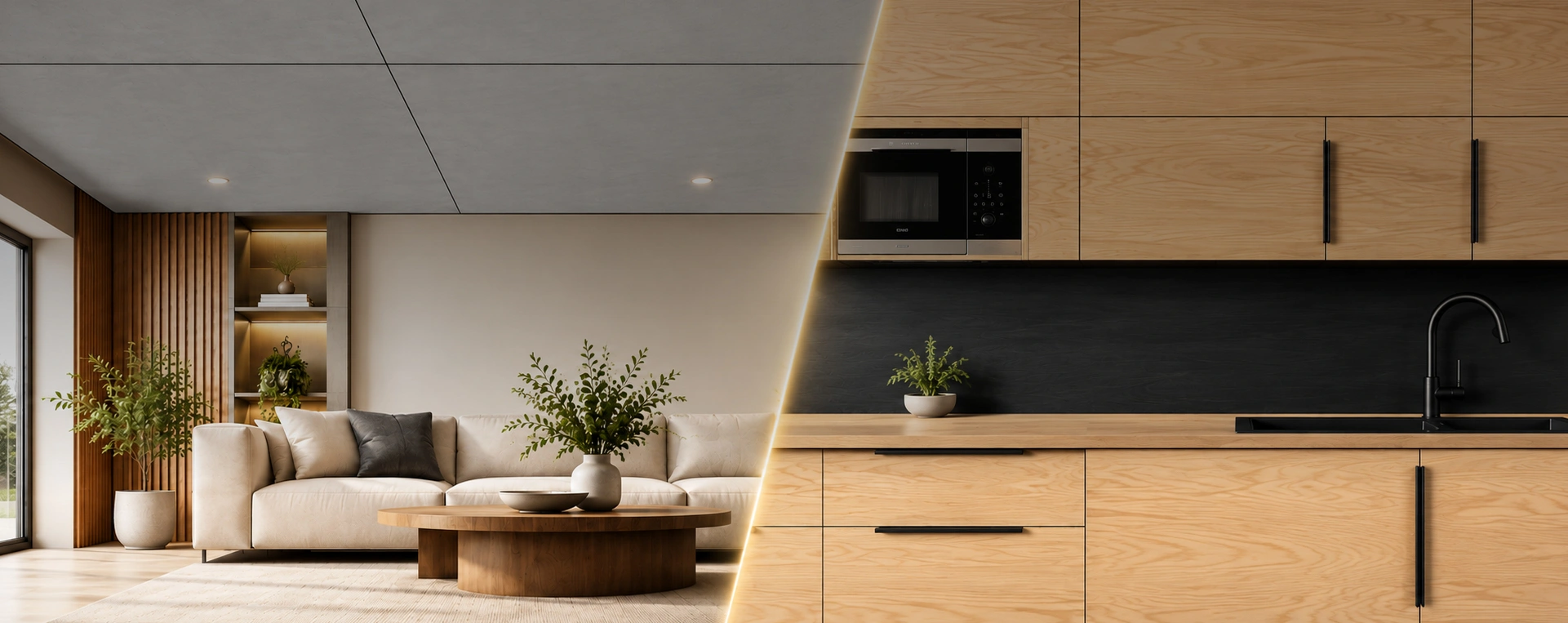
A fibre cement board is a rigid panel made using cement and reinforcing fibres. It can be used for partitions, false ceilings, wall applications, cladding and selected furniture. BirlaNu Aerocon Fibre Cement Boards, for example, are designed for false ceilings, partitions and fixed furniture.
Plywood is made by bonding thin wood veneers in alternating grain directions. This gives it good strength and stability and makes it widely used for wardrobes, kitchen cabinets, beds, shelves and other furniture. Its moisture performance depends heavily on the grade selected and how exposed edges and surfaces are protected.
How do they handle Indian weather?
Moisture is one of the biggest differences. Suitable moisture-resistant plywood can work well in humid homes, but prolonged water exposure can still lead to swelling, delamination or edge damage when the wrong grade is used or protection is poor.
A fibre cement board has an advantage in moisture-prone applications because it is not made from wood veneers. BirlaNu Aerocon Fibre Cement Boards are highly moisture resistant and suitable for humid or wet areas when properly sealed and finished.
What about termites?
For homeowners, termite resistance can be an important practical consideration. Plywood is wood-based, so the right treated product and preventive protection matter, particularly in areas with termite activity.
Fibre cement boards do not provide termites with the same wood-based material to attack. This makes termite resistance a useful advantage in applications where pest exposure is a concern. BirlaNu Aerocon board options include termite-resistant solutions for interior and exterior use.
That said, plywood remains highly practical where furniture needs strong screw holding, easy machining and familiar carpentry techniques.
Which is better for furniture?
Plywood has a strong advantage in traditional furniture applications. Its strength, stability and ease of cutting make it suitable for wardrobes, cabinets, beds, study tables and storage units. It also works easily with laminates, veneers and other finishes.
A fibre cement board can also be used for fixed furniture and selected cabinetry, especially where moisture or termites are a bigger concern. BirlaNu Aerocon Fibre Cement Boards can be painted, tiled or finished with laminates, giving homeowners flexibility in appearance.
The practical choice depends on the room. Plywood can make sense for a bedroom wardrobe or living room furniture, while fibre cement board may be more suitable for a moisture-prone utility area or an application where termite resistance is a priority.
What about walls, ceilings and exterior applications?
Fibre cement boards offer considerable versatility beyond furniture. BirlaNu Aerocon's range covers interior and exterior uses, with designer boards intended for ceilings, cladding and facade-related applications.
Plywood can also work well for interior panelling, partitions and decorative features where a warm wood-based finish is desired, though outdoor exposure calls for more careful material selection and protection because plywood is wood-based.
Key considerations for applications, performance, and protection include:
- Core uses: Fibre cement boards can be used for partitions, false ceilings, wall panelling and selected exterior applications.
- Detailing & drainage: For any exposed area, the board is only part of the solution; proper detailing, drainage and sealing matter.
- Waterproofing: Suitable roof waterproofing solutions can help prevent unwanted water from reaching ceilings and wall materials.
So, which lasts longer?
The honest answer is: it depends on the application.
A good-quality plywood product can provide long service in the right indoor environment, particularly when the correct grade is chosen and prolonged moisture is avoided. Its strength and workability make it a dependable option for furniture and many interior applications.
A fibre cement board can have an advantage where the material faces humidity, termites or greater environmental exposure. BirlaNu Aerocon Fibre Cement Boards are designed around durability, dimensional stability and moisture resistance, making them a practical option for walls, ceilings, partitions and selected exterior uses.
The best approach is therefore application-led rather than choosing one material for the entire home.
How to choose the right material?
Start by asking where the material will be installed - whether in a dry bedroom, a humid kitchen, a utility area, a bathroom-adjacent space or an exterior location.
Key considerations when selecting your material:
- Functional Needs: Consider whether it needs to carry loads, hold hinges and screws, take a decorative finish or simply provide a durable surface.
- Proper Installation: Installation matters just as much, so joints, edges and penetrations should be properly finished and sealed - good material used badly can still fail prematurely.
- Matching Conditions: For homeowners, the goal is not to find a single winner, but to choose the material that best matches the conditions of each part of the home.
Why consider BirlaNu fibre cement boards?
For homeowners looking for a durable alternative to conventional wood-based boards, BirlaNu Aerocon Fibre Cement Boards can be considered for applications such as partitions, false ceilings, wall panelling and fixed furniture. The fibre cement composition makes them well suited to areas where moisture, humidity and termites are a concern, while their versatility allows them to be finished with paint, tiles or laminates depending on the application. This makes BirlaNu boards a practical choice for different parts of the home where durability and ease of maintenance are important.
Conclusion
Choosing between a fibre cement board and plywood is less about finding an outright winner and more about matching the material to the application. Plywood remains a strong choice for furniture and interior work where strength, workability and a natural wood-based finish are priorities, while fibre cement boards can be advantageous in areas exposed to moisture, humidity and termites. By considering the room, level of exposure, intended use and installation requirements, homeowners can choose a solution that offers the right balance of durability, appearance and practicality.
FAQs
Can fibre cement boards be used for furniture?
Yes. Selected fibre cement boards can be used for fixed furniture and cabinetry.
Is fibre cement board termite resistant?
Fibre cement boards are not wood based, so termites do not have the same wood material to feed on. This is one of their practical advantages.
Is fibre cement board better than plywood during the monsoon?
It can be better suited to moisture-prone applications because it is not wood-based and offers strong moisture resistance. Proper sealing and installation remain important.