Key takeaways
- Fiber cement roofing sheets combine strength with fire, corrosion and moisture resistance, needing little upkeep over their lifespan
- Traditional roofing such as RCC, clay tiles and plain metal sheets each come with recurring maintenance demands, from waterproofing to tile replacement to rust treatment
- Indian weather, with its combination of heat, humidity and heavy monsoon rainfall, tends to favour materials that resist all three at once rather than excelling at just one
- Fiber cement generally offers the best balance of longevity and low maintenance for most Indian climates
- Charminar BirlaNu offers a range built specifically for these conditions, including Ultracool sheets for regions where heat is the primary concern
Choosing a roof is not just about covering a structure, it is about choosing something that will stand up to years of Indian summers, monsoons and, in many regions, coastal humidity or cyclonic winds. The material you pick has a direct impact on how much you spend on repairs; how comfortable the space stays through the year and how many decades the roof will actually serve you.
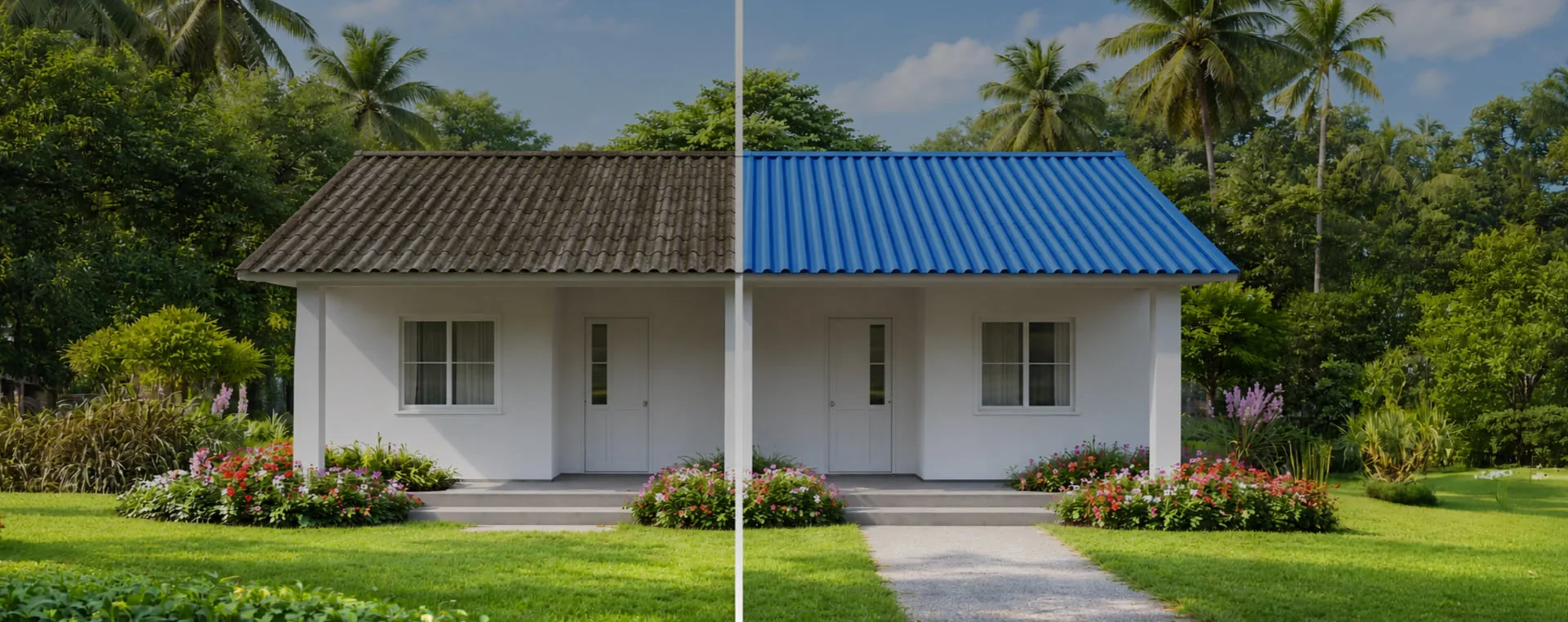
For generations, traditional roofing methods such as reinforced concrete slabs, clay tiles and plain metal sheets have been the default choice across India. In recent years, fiber cement roofing sheets have grown into one of the most trusted alternatives, and for good reason. This blog looks at how the two compare, particularly when it comes to surviving Indian weather over the long term.
What are fiber cement roofing sheets
Fiber cement roofing sheets are made by reinforcing cement with fibres, in a process similar to how steel reinforces concrete. This gives the sheet a combination of strength and flexibility that plain cement or brittle materials cannot match on their own.
- A few things make this material stand out:
- Fire resistant and corrosion resistant by nature, with no risk of rusting
- Low thermal conductivity, which keeps interiors noticeably cooler than metal roofing
- Good sound absorption, reducing noise from heavy rain
- Resistant to UV exposure, moisture, fungal growth and algae
- Lightweight compared to concrete, which reduces load on the supporting structure
Depending on the range, fiber cement sheets can last for decades with proper installation and basic upkeep, making them a long-term investment rather than a recurring expense.
Understanding traditional roofing options
When people refer to traditional roofs in India, they usually mean one of three options:
reinforced cement concrete (RCC) slabs, clay or country tiles and plain galvanised iron (GI) sheets. Each has served Indian homes for decades, but each also comes with trade-offs that become more visible as the years go by.
RCC slabs are structurally strong and remain the standard for multi-storey buildings, but concrete absorbs heat through the day and releases it indoors well into the evening, which makes upper floors noticeably warmer. Over time, exposure to monsoon moisture can lead to seepage and cracking, and waterproofing needs to be redone periodically to keep the roof watertight.
Clay tiles offer natural insulation and a classic aesthetic that many homeowners still prefer, but they are heavy, need a strong supporting structure and are prone to cracking or slipping out of place, which means individual tiles often need replacing over the roof's life.
Plain GI sheets are inexpensive and quick to install, but a few issues tend to show up with regular use:
- Rusting is common, especially in humid or coastal regions
- Heat builds up quickly indoors without added insulation
- Rain creates considerable noise without a lining underneath
- Lifespan is generally shorter unless the sheet is properly coated
How each performs against Indian weather conditions
India's weather is not uniform, and a roof that performs well in one region may struggle in another. Fiber
cement sheets are engineered to handle exactly this kind of variation.
In peak summer heat, fiber cement's low thermal conductivity keeps indoor spaces noticeably cooler than under metal roofing, where heat transfer is fast and constant. During monsoon months, the material's moisture and fungal resistance means it does not swell, warp or develop the seepage issues that concrete slabs are prone to over time. In coastal or high-humidity areas, corrosion resistance becomes a major advantage, since plain metal roofing in these regions often shows visible rusting within a few years.
Traditional roofing is not without merit here. RCC remains excellent for structural load-bearing in multi-storey construction, and clay tiles do offer natural cooling in hot, dry regions. But when weighed against sustained exposure to heat, humidity and heavy rainfall together, which is the reality across most of India, fiber cement tends to hold up with far less maintenance required along the way.
Which one actually lasts longer?
On raw structural strength, RCC concrete will usually outlast most roofing sheets, but that strength comes at the cost of ongoing waterproofing and repair work, particularly once cracks begin to appear. Clay tiles can last decades too, provided damaged tiles are replaced consistently, which adds up in labour and material costs over time. Plain metal sheets are the weakest performer here, typically needing replacement well before other options due to rust.
Fiber cement roofing sheets sit in a strong position because they combine a long service life with comparatively low maintenance. There is no rusting to manage, no recurring waterproofing cycle and no fragile tiles to replace, which is often what determines how long a roof genuinely lasts in practice rather than in theory.
What to check before choosing your roof
- Confirm the sheet meets Indian strength standards, such as IS 459:1992 for fiber cement roofing
- Check for fire resistance if the building is used for storage or industrial purposes
- Look at thermal performance if the space will be occupied through peak summer months
- Consider sound insulation for locations near traffic or in livestock and poultry sheds
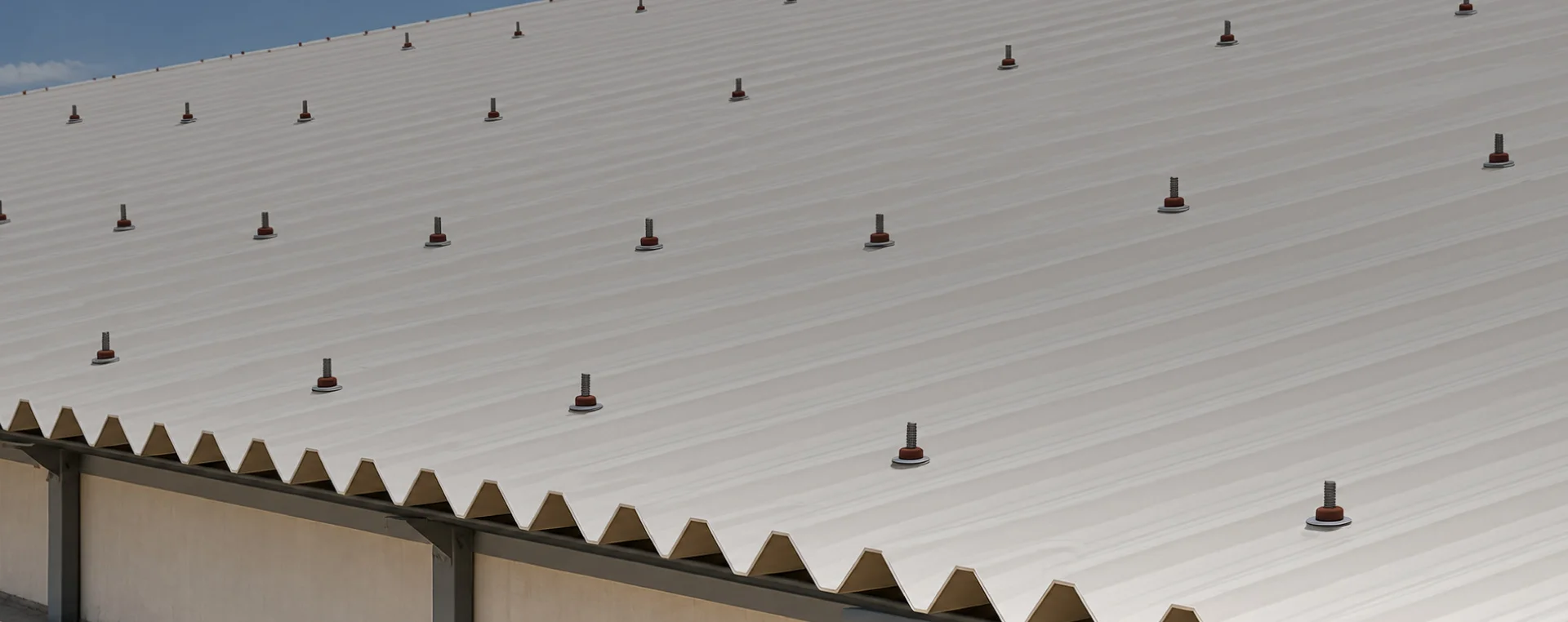
- Choose a manufacturer that offers proper fixing accessories and installation guidance, since even a strong sheet underperforms if installed incorrectly
Why Charminar BirlaNu is worth considering
Charminar BirlaNu roofs range is built specifically around Indian conditions, with options suited to different climates and applications. The core Fiber Cement Roofs range is built for strength and durability across residential, commercial and industrial use, while Fortune Fiber Cement Roofs are asbestos-free and designed with sustainability in mind. For regions where heat is the biggest concern, Ultracool Fiber Cement Roofs use high solar reflectance to reduce indoor temperatures by up to 8 degrees Celsius, a meaningful difference during Indian summers.
Every range is built with fire resistance, corrosion resistance and thermal and sound insulation as standard, which is exactly what a roof needs to perform consistently through India's mix of heat, humidity and monsoon rainfall. You can explore the complete range at birlanu.com/roofs.
Conclusion
There is no single roofing material that wins in every category, but when the goal is a roof that lasts with minimal upkeep across India's demanding weather, fiber cement roofing sheets consistently come out ahead of traditional options. They avoid the rusting that plagues plain metal sheets, the cracking and seepage that affect concrete and the fragility of clay tiles, all while keeping interiors cooler through the peak summer months.
Charminar BirlaNu brings this performance together in a range built for Indian conditions specifically, so whatever the project, there is a roofing solution designed to last. Explore the full range at birlanu.com/roofs.
FAQs
Do fiber cement roofing sheets last longer than traditional roofs?
Fiber cement roofing sheets can offer a long service life with relatively low maintenance. Their resistance to fire, corrosion, moisture and weathering helps them perform consistently in Indian conditions.
Which roofing material is best for Indian weather?
Fiber cement roofing sheets are well suited to Indian weather because they offer resistance to heat, moisture, corrosion and heavy rainfall, making them suitable for varied climates.
Are fiber cement roofing sheets better than metal roofs in hot weather?
Fiber cement generally transfers less heat than plain metal roofing, helping keep interiors more comfortable. This makes it useful for buildings exposed to strong Indian summers.
Are fiber cement roofing sheets suitable for coastal areas?
Yes. Their corrosion resistance makes fiber cement suitable for humid and coastal environments where plain metal sheets can be more susceptible to rust.
Do fiber cement roofing sheets require regular maintenance?
They generally require limited maintenance compared with roofing that needs recurring rust treatment, tile replacement or waterproofing. Periodic inspection and proper upkeep are still recommended.