Key takeaways
- Match pressure pipe ratings to your building height and maximum static head requirements. Buildings over three storeys need careful pressure calculation and often require multiple pressure classes.
- Select pressure pipes compliant with IS 4985:2021 and other relevant standards. Ensure material offers corrosion resistance, UV stability, and is lead-free for potable water safety.
- Choose pipe fitting accessories with equal or higher-pressure ratings. Invest in systems featuring advanced joint technology to ensure leakproof performance throughout the building's lifespan.
- Implement pressure zonation to optimise material selection and reduce costs whilst maintaining service quality across all floors.
- Select complete pipe solutions from reputable manufacturers offering technical support and performance warranties.
- Prioritise lightweight pipes that simplify installation and reduce labour costs on high-rise projects.
Introduction
Multi-storey buildings present unique challenges when it comes to water supply systems. The vertical distribution of water across numerous floors, maintaining consistent pressure at each level, and ensuring long-term reliability requires careful selection of pressure pipes and supporting pipe solutions. Whether you're designing a residential complex, commercial space, or industrial facility, understanding how to choose the right pressure pipes is fundamental to project success.
This guide explores the key factors that should influence your decision when selecting pressure pipes, fitting accessories, and complete pipe solutions for multi-storey buildings.
Understanding pressure pipes
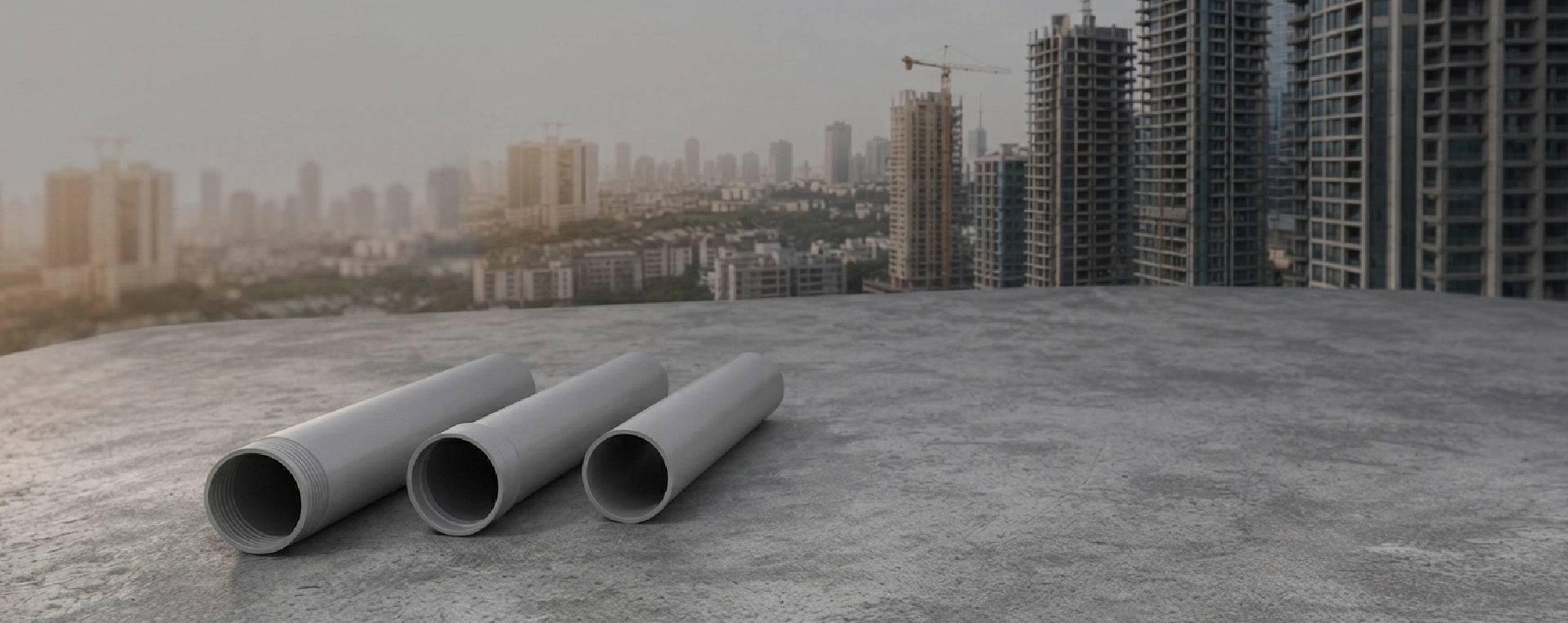
Pressure pipes are engineered to transport water under high pressure across varied distances and elevations. Unlike conventional drainage pipes, pressure pipes maintain structural integrity under load, making them essential for multi-storey water supply systems. These pipes must withstand both the static pressure from water column height and the dynamic pressures created by pumping systems.
When selecting pressure pipes for your project, it's important to understand that buildings over three storeys typically require pressure boosting systems, as municipal water mains alone cannot deliver adequate pressure to upper floors. This is where quality pressure pipes become critical to system performance.
Key factors when choosing pressure pipes
1. Building height and pressure requirements
The height of your building directly influences the pressure rating you need. Each metre of water column creates approximately 0.1 bar of pressure. For a 20-storey building, you may need pressure pipes rated for 8-10 bar (Class 3-4) at the base, decreasing towards the top. Calculate your system's maximum static head and choose pipes that exceed these requirements by a safety margin.
2. Material selection and standards compliance
Pressure pipes for multi-storey buildings should comply with relevant Indian Standards such as IS 4985:2021 for PVC-U pipes. The material must offer excellent corrosion resistance, UV stability, and lead-free composition to ensure water safety. Modern pressure pipes should also be lightweight for easier installation across multiple floors, reducing installation time and labour costs.
3. Pipe fitting accessories compatibility
Pipe fitting accessories form the backbone of your distribution system. These components must have equal or higher pressure ratings than your main pipes and must be compatible in size and material. Common fittings include elbows, tees, couplings, and reducers. Ensure your pipe solutions include fittings that maintain seal integrity, such as those featuring advanced technologies like TruFiT Technology, which guarantees leakproof joints without degradation over time.
4. Leakage prevention and durability
Leakage in multi-storey buildings can be catastrophic, affecting multiple units and causing structural damage. Choose pressure pipes with proven leakproof joint systems. High-quality pipes maintain their structural integrity under continuous stress and resist chemical degradation from chlorinated water supplies. This durability extends system lifespan to 50+ years, providing excellent return on investment.
5. Pressure zonation strategy
In tall buildings, pressure zonation divides the structure into segments, each with its own pressure regulation. Lower zones require higher-rated pressure pipes than upper zones. This strategy optimises pipe selection across the building, reduces costs, and minimises stress on fixtures. Your pipe solutions should support this design approach by offering multiple pressure classes suitable for different zones.
Complete pipe solutions for multi-storey applications
Selecting pressure pipes shouldn't be viewed in isolation. A comprehensive approach involves choosing integrated pipe solutions that include pipes, pipe fitting accessories, and supporting materials like solvent cement. These systems should be tested together and certified to perform as a unit under your specific pressure and temperature conditions.
BirlaNu pressure pipes: Premium solutions for multi-storey buildings
BirlaNu Pressure Pipes represent a trusted choice for multi-storey water supply systems across residential, commercial, and industrial applications. Available in sizes ranging from 90mm to 315mm with pressure classes from 1 to 5 (2.5 to 10 kgf/cm²), BirlaNu pressure pipes offer the flexibility needed for complex pressure zonation strategies.
Manufactured in compliance with IS 4985:2021, the pipes feature cutting-edge TruFiT Technology, ensuring leakproof joints that maintain integrity throughout the system's lifespan. Each pipe is lead-free, non-toxic, and fully UV stabilised, making them suitable for potable water applications. The corrosion and abrasion-resistant properties ensure reliable performance in varying water supply conditions, whilst the lightweight nature simplifies handling and installation across multiple storeys.
BirlaNu pressure pipes are complemented by a comprehensive range of compatible pipe fitting accessories in matching pressure classes, alongside high-quality solvent cement, creating an integrated pipe solutions package.
This complete system approach eliminates compatibility concerns and provides architects, engineers, and builders with documented performance warranties and technical support from planning through installation.
Installation and support considerations
Lightweight pressure pipes offer significant advantages during installation. Easier handling reduces labour costs and installation time, particularly important when working at height. Ensure your chosen pipe solutions come with clear installation specifications and that the manufacturer provides technical support during construction. Proper installation of pipes and fitting accessories directly impacts system longevity and performance.
Conclusion
Selecting the right pressure pipes for multi-storey buildings is a critical decision that affects project success, building longevity, and water supply reliability. By carefully considering building height, pressure requirements, material standards, and choosing integrated pipe solutions with compatible fitting accessories, you ensure optimal system performance.
Modern pressure pipes with advanced technologies like leakproof joint systems, combined with properly selected pipe fitting accessories, provide decades of reliable service. Whether planning a new development or upgrade, partner with manufacturers offering complete pipe solutions, technical expertise, and performance warranties.
Invest in quality from the start. The cost of premium pressure pipes and fitting accessories is quickly offset by eliminating costly leaks, reducing maintenance, and ensuring consistent water supply throughout your multi-storey building.
FAQs
Are pressure pipes safe for potable water supply?
Yes, high-quality pressure pipes specifically manufactured for potable water applications are entirely safe. They must be lead-free, non-toxic, and certified by relevant authorities. Always verify that your chosen pipes comply with IS 4985:2021 and are approved for drinking water use.
What is the lifespan of modern pressure pipes?
Quality pressure pipes can last 50-60 years or longer with proper installation and maintenance. Factors affecting longevity include UV stability, corrosion resistance, and protection from external mechanical stress. Pipes with advanced joint technology like TruFiT Technology maintain seal integrity throughout this period.
How do I ensure pipe fitting accessories are compatible with my pipes?
Always source pipe fitting accessories from the same manufacturer as your main pipes or verify compatibility through technical specifications. Fittings must match the pipe diameter, material, and pressure rating. Integrated pipe solutions eliminate guesswork by providing tested, compatible components.
Can pressure pipes handle temperature fluctuations in multi-storey buildings?
Modern pressure pipes are designed to handle temperature variations typical in building environments. However, always account for thermal expansion by installing proper supports and expansion loops as per design guidelines.