

5 minutes read
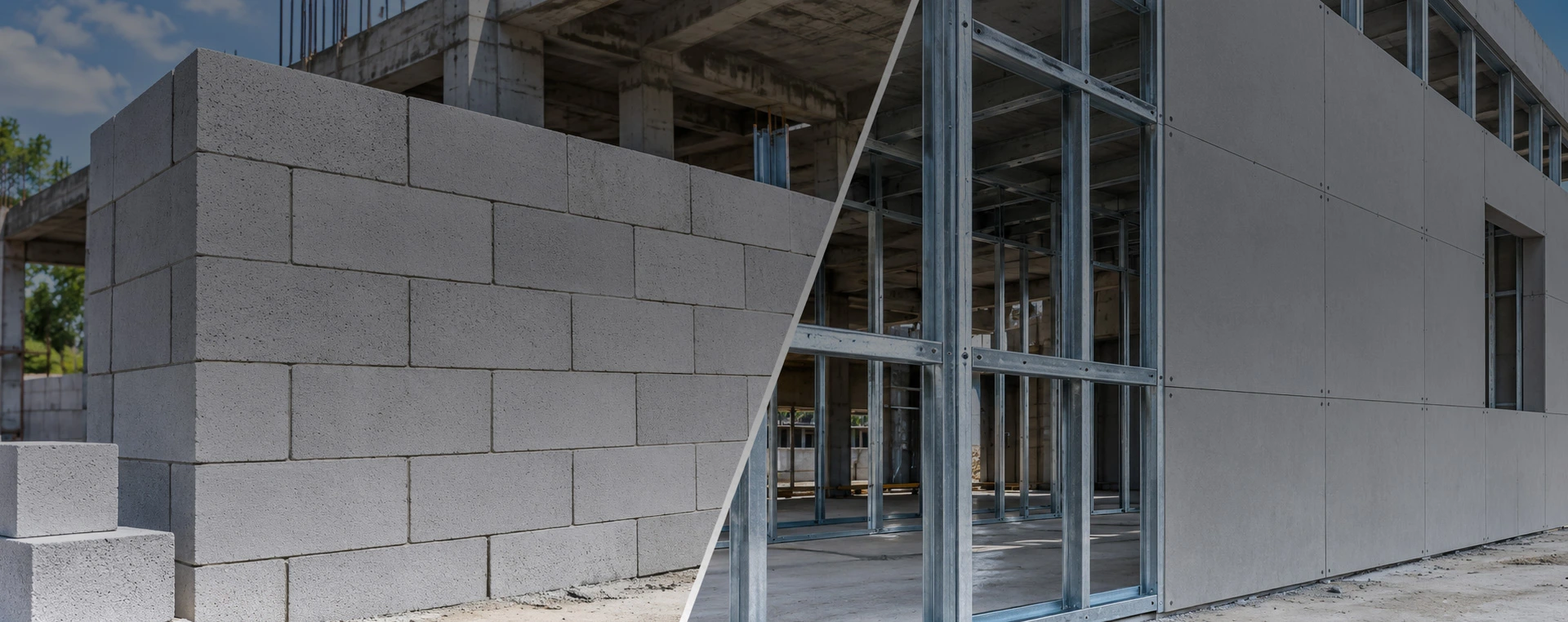
Ask five builders whether AAC blocks or fiber cement boards are better for walls and you will get five different answers, because the question is slightly unfair. The materials are made differently, installed differently and used differently. This guide does not crown a winner. It shows where each one belongs and where the choice between them genuinely matters.
AAC blocks create wet, masonry-style walls. They are laid with thin-bed jointing mortar rather than conventional cement mortar and then plastered or finished with putty. Fiber cement boards create dry walls. They are fixed to a frame, joined and finished without wet trades. One builds the wall, while the other covers or divides space.
|
Feature |
AAC blocks |
Fiber cement boards |
|
Role |
Wall body, internal and external |
Partition, lining, ceiling or cladding on a frame |
|
Made from |
Fly ash, cement, lime and an aeration agent |
Fly ash, cellulose fibres and fire-resistant fillers, autoclaved |
|
Standard |
IS 2185 (Part 3):1995 |
IS 14862 |
|
Size |
600 × 200 mm face, 100 to 300 mm thick |
2440 × 1219 mm and 1829 × 1219 mm, 4 to 18 mm thick |
|
Key properties |
Density 551 to 650 kg/m³, thermal conductivity 0.24 W/mK, 4-hour fire resistance at 200 mm |
Dimensional stability, sound insulation and moisture resistance |
|
Situation |
AAC blocks |
Fiber cement boards |
Better fit |
|
Internal partitions |
Solid, plastered wall with good sound reduction (37 to 42 dB) |
Light, fast, dry build on a frame |
Boards for speed and flexibility, AAC for solidity |
|
External walls |
Suitable for internal and external walls |
Only as cladding over a structure, not as the wall itself |
AAC for the wall, boards for cladding |
|
Infill in framed buildings |
Lightweight infill that reduces dead load |
Panels suit steel and prefabricated structures |
AAC for RCC frames, panels for steel frames |
|
Wet areas |
Needs plaster and waterproofing |
Resists moisture when properly sealed and finished |
Either, with correct finishing |
|
Future changes |
Permanent |
Demountable systems are easier to reconfigure |
Boards or panels |
|
Finish |
Thin plaster of 8 to 12 mm, then putty |
Takes paint, tiles, wallpaper or laminates directly |
Depends on the finish |
Neither can stand in for the other everywhere. Boards cannot carry structural loads as a wall, and AAC blocks cannot form false ceilings, fixed furniture or lightweight cladding.
BirlaNu Aerocon AAC blocks are made from fly ash and conform to IS 2185 Part 3. They carry GreenPro and IGBC certifications and are joined with thin-bed mortar for better bonding and less thermal bridging. They suit internal and external walls in residential, commercial, institutional and industrial buildings, and, depending on thickness and design, load-bearing and non-load-bearing applications.
List of BirlaNu wall construction material
|
Product |
Best for |
Key specifications |
|
AAC Blocks |
Internal and external masonry walls |
600 × 200 mm, 100 to 300 mm thick |
|
Fiber Cement Boards |
Partitions, false ceilings, fixed furniture |
4 to 18 mm thick, IS 14862 |
|
Wall Panels |
Partitions, demountable walls, mezzanine floors |
2400, 2700 and 3000 mm long, 600 mm wide, 50 to 100 mm thick |
|
Classic Series |
Exterior cladding, soffits and façades |
Standard cement and designer finishes |
|
Aerocon Planks |
Façades, soffits, louvres and ceilings |
150 × 2440 mm, 8 mm thick |
|
Elements Collection |
Interior ceilings and decorative wall paneling |
595 × 595 mm, 8 designs |
|
Panel Jointing Compound |
Sealing joints between panels |
Ready-to-use dry mix |
AAC blocks and fiber cement boards solve different problems. Use AAC blocks when you need a solid, insulating wall body, and use boards or panels when you need speed, flexibility, a dry finish or decorative cladding. Many projects use both, with AAC for the envelope and boards for interiors. Explore the full range at birlanu.com/walls and match each wall to the right system.
Are AAC blocks or fiber cement boards better for partition walls?
Both work, but differently. AAC blocks give a solid, plastered partition, while fiber cement boards on a frame give a lighter, faster, dry partition that is easier to change later.
What is the standard AAC block size in India?
BirlaNu Aerocon AAC blocks have a 600 × 200 mm face in thicknesses of 100, 125, 150, 200, 230 and 300 mm. Dry weight ranges from 7.8 kg to 23.4 kg depending on thickness.
Can fiber cement boards be used for external walls?
Only as cladding. Exterior-grade boards, such as the Classic Series and Aerocon Planks, cover façades and soffits over a structure. They do not replace a structural wall.
Can AAC blocks and fiber cement boards be used together?
Yes. A common approach is AAC blocks for external and structural-infill walls, with fiber cement boards for internal partitions, false ceilings and cladding.
The latest
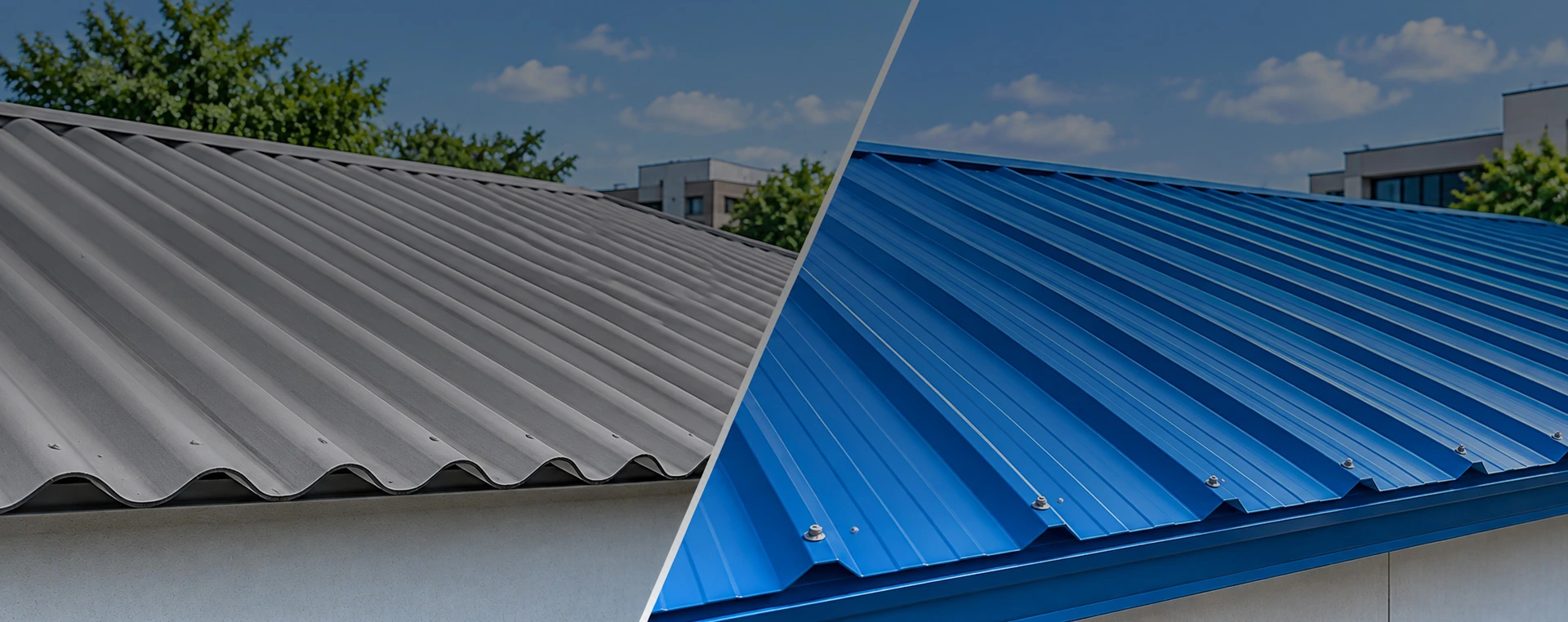
Compare lifetime performance, upkeep and comfort to choose the roof that keeps giving for decades
18/11/2026
5 minutes read
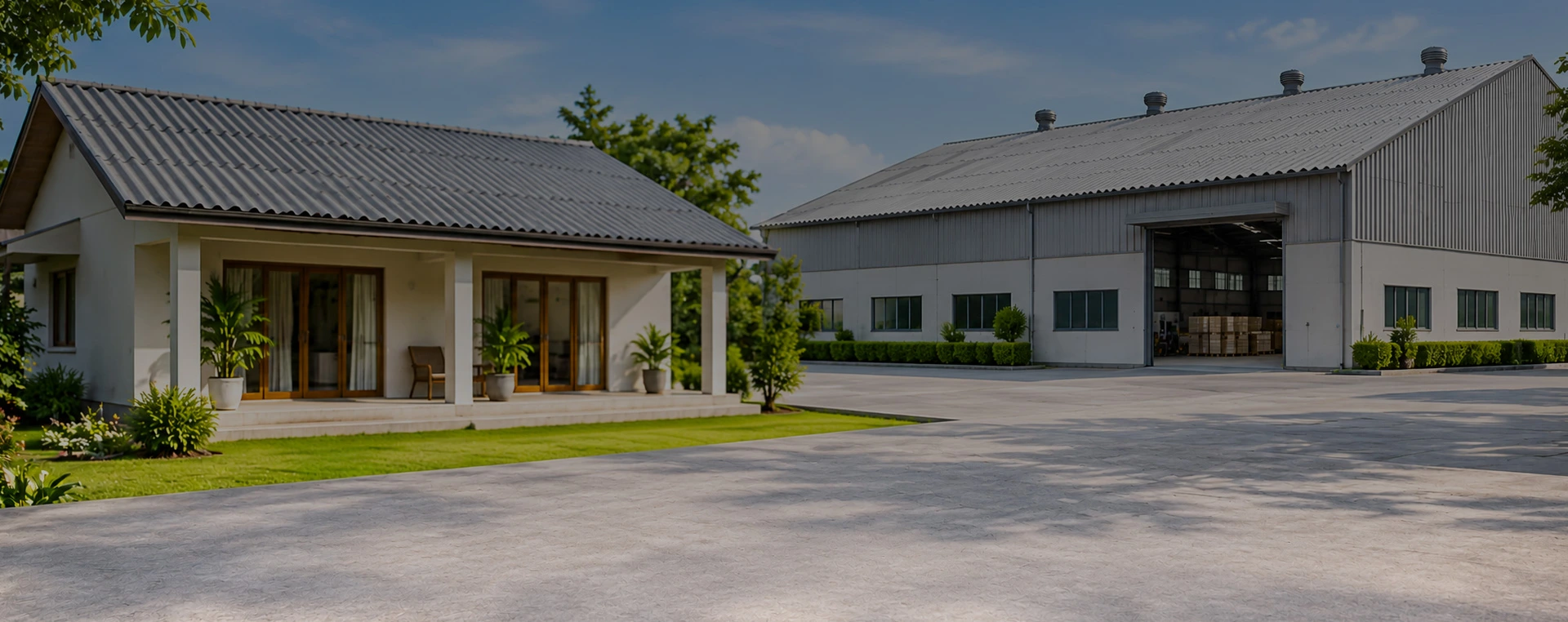
Everything you need to choose, compare and install asbestos-free roofing for homes, farms and factories
17/11/2026
5 minutes read
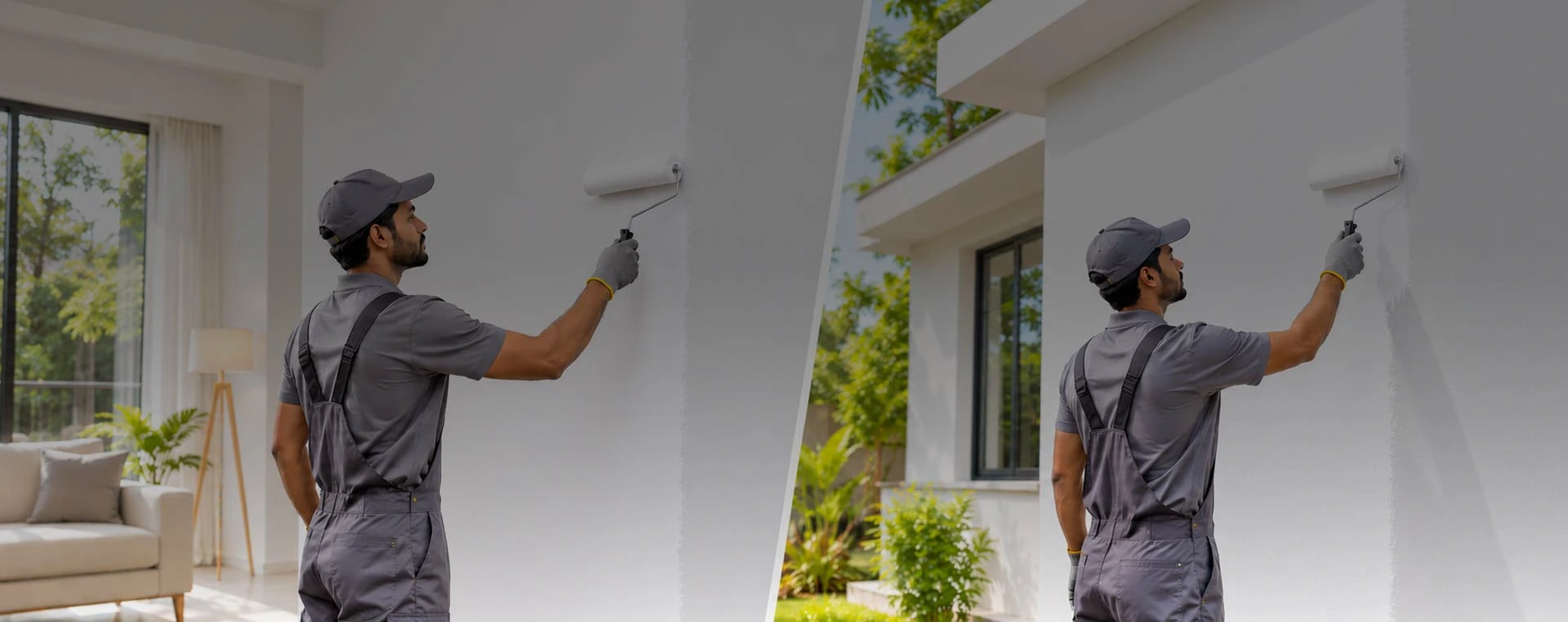
Match the primer to the wall’s location, exposure and condition for paint that sticks, looks even and lasts.
17/11/2026
4 minutes read
Compare lifetime performance, upkeep and comfort to choose the roof that keeps giving for decades
- - 18/11/2026
Everything you need to choose, compare and install asbestos-free roofing for homes, farms and factories
- - 17/11/2026
Match the primer to the wall’s location, exposure and condition for paint that sticks, looks even and lasts.
- - 17/11/2026

Choose the right putty for every wall and apply it the right way for a smooth, lasting paint finish.
- - 16/11/2026
