Key takeaways
- Wooden flooring brings warmth, comfort and natural character to interiors.
- Tiles offer durability, design flexibility and convenient maintenance.
- Modern wooden flooring includes engineered wood, laminate, vinyl and resilient flooring options.
- Both flooring categories can be used across different areas depending on product specifications.
- The best flooring for home interiors depends on lifestyle, climate, maintenance expectations and design preferences.
- Many Indian homes benefit from combining different flooring materials rather than choosing only one.
Flooring plays an important role in how a home looks, feels and functions. It influences the visual character of a room, the comfort experienced underfoot and the amount of maintenance required over time.
For individual home builders, the wooden flooring vs tiles discussion should not be seen as a contest between two materials. Both offer distinct advantages and can work well in Indian homes when selected according to the space, lifestyle and performance required.
Understanding their characteristics can help homeowners make a more informed and practical decision.
What does wooden flooring bring to a home?
Wooden flooring is often chosen for the warmth and depth it adds to interiors. Its grain patterns, natural tones and textured appearance can make a space feel inviting without requiring excessive decoration.
The term wooden flooring now covers a broad range of options. Engineered wood provides the character of real wood, while laminate creates a wood-inspired appearance with practical everyday performance. Vinyl and other resilient flooring categories provide further flexibility where homeowners want the look of wood along with easier care and greater resistance to moisture.
Parador BirlaNu offers engineered wood, laminate, vinyl and Modular ONE flooring, giving homeowners different options based on their preferred appearance, comfort, maintenance requirements and room conditions. This makes it possible to create a wood-led interior without using exactly the same type of flooring throughout the home.
The choice should be based on the specifications of the individual product rather than the category name alone. Some flooring options are designed for dry indoor conditions, while others are better equipped to manage spills, regular cleaning or changing humidity.
What do tiles offer Indian homes?
Tiles remain a familiar and dependable flooring choice because of their strength, versatility and wide range of finishes.
They are available in designs inspired by marble, stone, concrete, terrazzo and wood, allowing them to complement both traditional and contemporary homes. Different surface textures, sizes and formats also give homeowners considerable flexibility while planning the overall interior.
Tiles are generally easy to clean and can withstand regular use when correctly selected and installed. Their hard surface also makes them suitable for homes where durability and straightforward upkeep are important considerations.
However, tile performance varies according to factors such as porosity, surface finish, thickness and intended application. A polished tile, textured tile and outdoor-grade tile may perform very differently even if they look similar.
Floor tiles vs wooden flooring: Understanding the key characteristics
Visual appearance
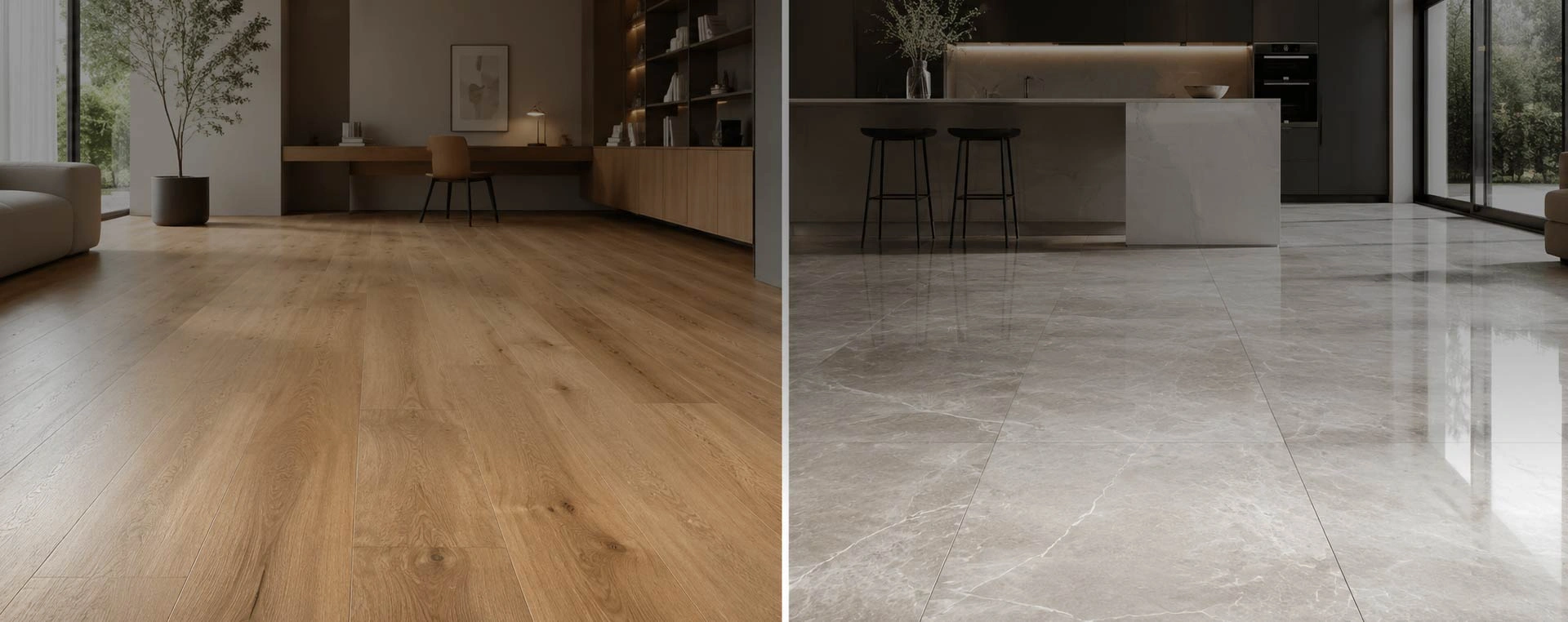
Wooden flooring creates a warm, continuous and natural-looking surface. It can soften modern interiors and add character to simple spaces.
Tiles provide greater diversity in colour, pattern, shape and finish. They can be subtle and minimal or used as a stronger design element.
The right choice depends on the atmosphere homeowners want to create rather than which material appears more premium.
Comfort underfoot
Wooden and resilient flooring options generally feel warmer and more forgiving underfoot than tiles. Their slightly softer surface can reduce the harshness experienced during prolonged standing or walking, making them a comfortable choice for homes with older adults or family members who experience sensitivity in their feet, knees or lower back. Research on standing surfaces indicates that softer flooring can help reduce discomfort in the lower limbs and back compared with harder surfaces, although the actual comfort also depends on the flooring construction and underlay.
Tiles have a firmer and cooler surface, which can feel refreshing in warmer climates and may suit homeowners who prefer a solid, smooth floor. However, they may feel less forgiving during extended periods of standing. In homes with elderly family members, factors such as slip resistance, even installation and smooth transitions between flooring materials should also be considered.
Moisture management
Tiles are widely valued for their ability to manage water and regular cleaning. However, the suitability of a tile still depends on its finish, grip and installation.
Within wooden and wood-inspired flooring, moisture performance differs significantly. Engineered wood and laminate have different care requirements, while suitable vinyl flooring can offer waterproof performance for spaces where spills or moisture are greater considerations.
Homeowners should therefore check the recommended application and maintenance instructions for each product instead of assuming that all wooden flooring behaves in the same way.
Cleaning and maintenance
Tiles can generally be swept and wet-cleaned regularly. Grout lines may require additional attention, particularly in heavily used areas.
Wooden flooring requires maintenance based on the material selected. Engineered wood usually benefits from controlled cleaning and prompt spill removal. Laminate is relatively easy to maintain, while vinyl and resilient flooring can offer greater convenience for active households.
Neither option is completely maintenance-free. Consistent cleaning and correct care help preserve the appearance of any floor.
Installation
Tile installation usually involves preparing the surface, applying adhesive or mortar, aligning the tiles, grouting and allowing the floor to set.
Many modern wooden, laminate and resilient flooring systems use click-based installation methods. Depending on the condition of the existing surface, these may support faster installation and easier renovation.
In both cases, a flat, stable and properly prepared subfloor is essential. Poor installation can lead to uneven surfaces, movement, gaps or premature damage regardless of the flooring material.
Design flexibility
Tiles offer an extensive selection of shapes, colours and decorative finishes. They can be used to create a uniform floor or define different areas visually.
Wooden and wood-inspired flooring can create continuity across connected spaces. Parador BirlaNu’s range of engineered wood, laminate, vinyl and Modular ONE flooring allows homeowners to explore different performance levels while maintaining a coordinated wood-led design language.
How should homeowners make the final decision?
The best flooring for home construction depends on more than appearance. Individual home builders should consider:
- The amount of footfall the floor will receive
- The likelihood of spills or moisture
- Local climate and humidity
- Cleaning habits and maintenance expectations
- Comfort underfoot
- Installation time and subfloor condition
- The overall interior design
- The complete installed cost
Rather than treating floor tiles vs wooden flooring as an either-or decision, homeowners can use each material according to the character and requirements of their home.
Tiles may support areas where strength and regular cleaning are priorities, while engineered wood, laminate, vinyl or resilient flooring can add warmth and comfort to other parts of the interior. The exact combination will vary from one home to another.
Conclusion
There is no universal winner in the wooden flooring vs tiles comparison. Tiles provide durability, versatility and convenient upkeep, while wooden and wood-inspired flooring bring warmth, comfort and natural character.
Modern home flooring ideas increasingly combine materials based on how each part of the home is used. By understanding product specifications and planning room by room, individual home builders can choose flooring for Indian homes that feels cohesive, performs reliably and supports their lifestyle over the long term.
Explore the right flooring solutions for your home
Explore Parador BirlaNu flooring to discover engineered wood, laminate, vinyl and resilient flooring options for different interior needs.
For tile installations, explore BirlaNu tile adhesive solutions designed to support a strong and durable finish.
FAQs
Is wooden flooring practical for Indian homes?
Yes. Engineered wood, laminate, vinyl and resilient flooring offer different performance characteristics. The right option should be selected according to climate, moisture exposure, usage and maintenance requirements.
Are tiles suitable for every part of a home?
Tiles are versatile, but the finish and specification should match the intended application. Grip, porosity, durability and ease of maintenance should all be considered.
Which flooring is easier to maintain?
Tiles generally support regular wet cleaning. Maintenance for wooden flooring depends on the category, with engineered wood requiring more controlled care and vinyl offering greater resistance to spills and moisture.
Can wooden flooring and tiles be used in the same home?
Yes. Combining materials can help homeowners balance durability, comfort and visual appeal while giving different spaces their own character.
What should be checked before buying flooring?
Homeowners should review the product’s intended application, moisture resistance, wear performance, installation requirements, warranty and maintenance instructions before making a decision.