
7 minutes read
Key takeaways
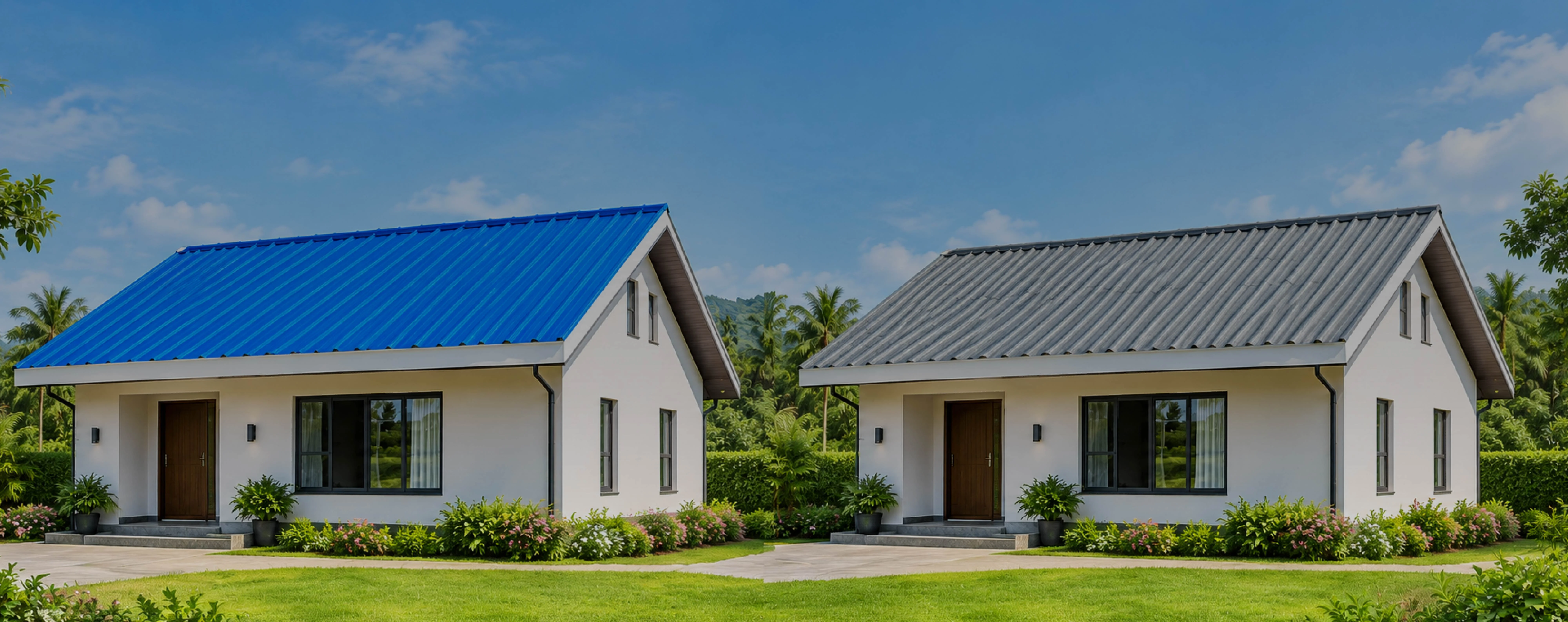
Choosing a roofing sheet sounds simple until you see how many options are on the table. Two of the most popular materials across India are fibre cement and coloured steel, and each has its own strengths. One keeps interiors quieter and more comfortable. The other is light, quick to install and comes in a wide range of finishes.
This guide puts them side by side, explains where each performs best and ends with a simple "choose this if" guide, so you can pick the right roofing sheet for your home, farm, shed or commercial building.
What are fibre cement and coloured steel roofing sheets
A fibre cement roofing sheet is made from high-grade cement blended with reinforcing fibres. The fibres work much like steel reinforcement in concrete, adding strength and toughness. A fiber sheet for roof like Charminar BirlaNu's comes in three options:
A coloured steel roofing sheet takes a different route. Charminar BirlaNu Coloured Steel Roofs are made from pre-painted Galvalume (PPGL) steel.
Fibre cement vs coloured steel: side-by-side comparison
Here is how the two compare on the points that matter most in daily use.
|
Factor |
Fibre cement |
Coloured steel |
|
Heat and thermal comfort |
Offers thermal insulation. Ultracool adds high solar reflectance |
Metal heats up faster, so comfort often needs added insulation |
|
Noise (rain and traffic) |
Noise insulation helps in heavy rain and near roads |
Can be louder in rain unless lined or insulated |
|
Corrosion and weather resistance |
Corrosion, UV, moisture, fungal and algae resistant |
AZ70 coating and paint layers resist corrosion |
|
Fire safety |
Fire resistant and non-combustible |
Non-combustible |
|
Weight and handling |
Heavier, at about 12.3 to 12.7 kg per metre |
Light and easy to transport |
|
Installation |
Needs correct slope, overlap and accessories, done by trained professionals |
Light sheets make installation easier and faster |
|
Look and colour options |
Natural grey, blue, green, yellow and red. Fortune adds white and dark grey |
Wide range of vibrant shades with a modern look |
|
Best-suited buildings |
Homes, terrace rooms, farm buildings, poultry and industrial sheds |
Industrial units, commercial buildings and contemporary homes |
|
Maintenance |
Pre-finished colours need no painting. Minimal upkeep |
Retains colour and strength without regular repainting |
Where fibre cement performs best
Fibre cement suits spaces where indoor comfort matters. Charminar BirlaNu's sheets combine thermal and noise insulation with fire and corrosion resistance, UV and moisture resistance, and protection against fungal and algae growth. They are also easy to handle on site.
That makes a fibre cement roofing sheet a natural fit for homes, terrace rooms, extensions and farm buildings. Owners using Charminar BirlaNu sheets report indoor temperatures 4 to 5 degrees lower and less noise from nearby roads.
Within the same family, Ultracool is the heat-focused option, and Fortune suits projects that want an asbestos-free, eco-conscious choice. For a deeper look at cooling, read our guide to roof cooling solutions for energy-efficient living.
Where coloured steel performs best
Coloured steel shines where weight, speed and appearance lead the brief. BirlaNu highlights these benefits:
This makes coloured steel a strong option for industrial units, commercial buildings and projects that want a lightweight, modern look. It can also work as a roofing sheet for homes where a contemporary finish is the priority.
Key factors to weigh before you choose
Which roofing sheet should you choose: a quick guide
Choose fibre cement if:
Choose coloured steel if:
Installation matters as much as the sheet
Even the best roofing sheet will underperform if it is installed poorly. Whichever material you choose, it needs the correct slope, proper sheet overlap and the specified fixing accessories, fitted by trained professionals. BirlaNu recommends a slope of at least 18 degrees for good drainage and performance.
Accessories are part of a good roof, not an afterthought. Charminar BirlaNu Tools & Accessories include EPDM washers for leakproof sealing, J and L bolts for anchoring, and weatherproof ridge capping. Together they help stop water getting in and prevent roofs lifting during storms. EPDM washers should not be reused once compressed, because they lose their sealing ability.
FAQs
What is the main difference between fibre cement and coloured steel roofing sheets?
Fibre cement is made from cement and reinforcing fibres, and offers thermal and noise insulation. Coloured steel is pre-painted Galvalume steel, which is light, easy to transport and comes in many shades.
Which roofing sheet is suitable for industrial sheds?
Either can serve as a roofing sheet for industrial sheds. Coloured steel is light and popular for industrial and commercial buildings. Fibre cement is a good fit where heat, noise or fire resistance matter inside the shed.
Do these roofing sheets need painting or heavy maintenance?
No. Charminar BirlaNu fibre cement roofs come in pre-finished colours and need no additional painting. Coloured steel roofs retain colour and strength without regular repainting. Both are low maintenance, though occasional checks on fixings and surfaces are still a good habit.
What slope and accessories do I need for a fiber sheet for roof or a steel roof?
BirlaNu recommends a slope of at least 18 degrees for good drainage. You also need correct sheet overlap and the specified accessories, such as EPDM washers, bolts and ridge capping, fitted by trained professionals.
How the right construction chemicals can prevent common building maintenance problems
- - 22/10/2026
Learn when waterproof putty is worth the upgrade for your walls
- - 19/10/2026
Get damp-prone walls ready for a fresh festive-season makeover
- - 15/10/2026
Get a smoother, longer-lasting paint finish with the right wall preparation
- - 15/10/2026
