As winter sets in, tile installation becomes a more demanding task than usual. Cold temperatures can slow down the curing process, increase moisture retention, and even affect how well tiles adhere to their surfaces. If not managed properly, this can lead to weak bonds, uneven finishes, or tiles loosening over time. However, with the right approach and a high-performance adhesive, such as BirlaNu Tough Tile Adhesive, you can achieve a durable, long-lasting finish even in the harshest winter conditions.
Why Winter Tiling Needs Special Care?
During colder months, the curing and hydration of conventional cement-based adhesives slow significantly. Low temperatures delay chemical reactions, preventing the adhesive from achieving full strength and flexibility. Surfaces exposed to condensation or frost can further compromise adhesion, making it essential to adapt both product choice and application technique when installing tiles in winter.
Choose the Right Adhesive for Cold Weather
For reliable performance in low temperatures, professionals recommend using polymer-modified tile adhesives. These formulations contain special polymers that improve bonding strength, flexibility, and water resistance - crucial factors when tiling in winter.
Products like
BirlaNu Tough Tile Adhesive are engineered to deliver superior grip and extended working time, even when temperatures dip. Their advanced polymer technology enhances adhesion on both porous and non-porous surfaces, ensuring a secure hold that withstands thermal movement and seasonal changes.
When installing tiles in winter:
- Use a polymer-modified adhesive like BirlaNu Tough Tile Adhesive (TA 105) for strong, reliable bonding across indoor and outdoor surfaces, even in cold conditions.
- Avoid standard cement-sand mixes, as they may not cure properly or reach full strength in low temperatures.
- Refer to the product datasheet to ensure suitability for winter use and follow the recommended mixing and curing guidelines.
Best Practices for Cold-Weather Tiling
In winter, the success of any tiling work depends largely on how well the surface is prepared and how carefully the adhesive is handled. Proper preparation ensures a strong bond and a long-lasting finish, even in low temperatures.
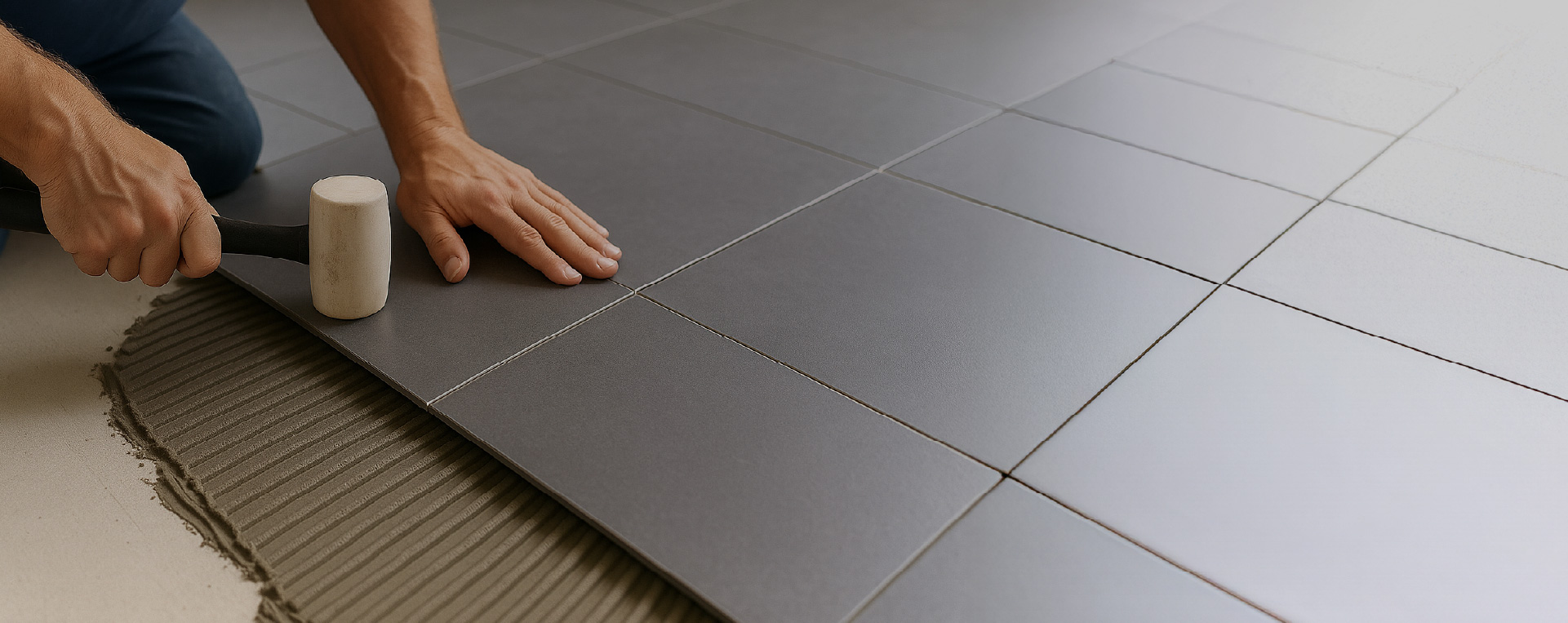
- Surface preparation: Before tiling begins, the surface needs to be clean, level, and completely dry. Any dust, grease, or moisture - including frost or condensation - can prevent the adhesive from bonding properly. If required, the surface is gently warmed to remove dampness and create the right conditions for tiling.
- Adhesive mixing: The adhesive should be mixed with clean, room-temperature water to achieve a smooth, even consistency. Using very cold water can slow down the curing process and affect bond strength.
- Application and coverage: The adhesive is then spread evenly using a notched trowel suitable for the tile size. In colder weather, ensuring full contact between the adhesive and the back of each tile helps create a stronger, more durable hold.
- Curing time: Tiles take longer to set in cold conditions. Allowing adequate curing time ensures the adhesive develops full strength before the surface is used or exposed to moisture.
When these steps are followed carefully - especially with a reliable product like
BirlaNu Tough Tile Adhesive (variants like TA 105) - the result is a smooth, secure tile finish that lasts, no matter how cold it gets.
FAQs
Why is surface preparation important for winter tile installation?
Cold or damp surfaces can prevent proper bonding. Ensuring the base is clean, dry, and stable helps the adhesive form a strong, lasting hold.
Which adhesive works best in winter?
A polymer-modified adhesive such as BirlaNu Tough Tile Adhesive (TA 105) gives better grip and flexibility in low temperatures.
Does cold weather slow curing?
Yes, it does. Allow extra time for the adhesive to set fully.