Key takeaways
- Industrial roofing should be selected according to the building’s purpose, climate and operating conditions.
- Good roofing sheets support thermal comfort, weather protection, safety and durability.
- Fibre cement roofs can provide thermal and sound insulation along with fire and corrosion resistance.
- Charminar BirlaNu Ultracool Fiber Cement Roofs can help reduce indoor temperatures by up to 8°C and have an SRI of 99.
- Correct roof design and installation are essential for long-term performance.
The roof of an industrial or agricultural building remains exposed to sunlight, rain, wind and changing temperatures while protecting everything below.
Choosing roofing only on initial price can create higher costs through heat, maintenance, corrosion or poor installation.
The best roofing solution should therefore balance strength, comfort, safety, maintenance and suitability for the building’s actual use.
Why roofing selection matters for industrial buildings
Industrial roofs cover large areas, so the material can influence indoor temperature, noise and weather protection.
A warehouse may need reliable coverage and manageable indoor conditions. A poultry or dairy farm may require thermal and sound insulation, while a factory or workshop may prioritise durability, fire resistance and low maintenance.
Understanding these needs before comparing roofing sheets helps buyers choose on performance rather than familiarity or price alone.
Important benefits of good industrial roofing
1. Better thermal comfort: Large roof surfaces receive prolonged solar exposure. When the roof transfers too much heat indoors, the building may become uncomfortable and depend more heavily on fans or other cooling equipment.
Charminar
BirlaNu Ultracool Fiber Cement Roofs are designed for this requirement. Their high solar reflectance surface has an SRI of 99 and can help reduce indoor temperatures by up to 8°C, depending on climate, roof design and installation quality.
2. Strength and weather resistance: Industrial roofing must withstand sun, seasonal rain, humidity and temperature changes. The Charminar BirlaNu roof range includes fibre cement and steel options for residential, commercial and industrial applications.
The fibre cement roofs are designed to offer durability, thermal and sound insulation, fire resistance, corrosion protection and termite resistance.
3. Sound insulation: Rainfall, traffic and machinery can make large sheds noisy. Sound-insulating roofing can help create a calmer environment in poultry farms, workshops and warehouses.
4. Fire and corrosion resistance: Fibre cement roofing does not rust and can offer fire-resistant performance, supporting long-term safety and strength. These characteristics can be particularly valuable in industrial, agricultural and storage structures.
5. Practical maintenance: A roof that needs frequent repairs or recoating can interrupt operations and increase lifecycle costs. Ultracool Fiber Cement Roofs use a specially developed 100% acrylic polymer coating. The coating is water repellent and its cooling effect can last for up to four years based on accelerated heat-rain cycle and UV exposure testing.
Where can industrial roofing sheets be used?
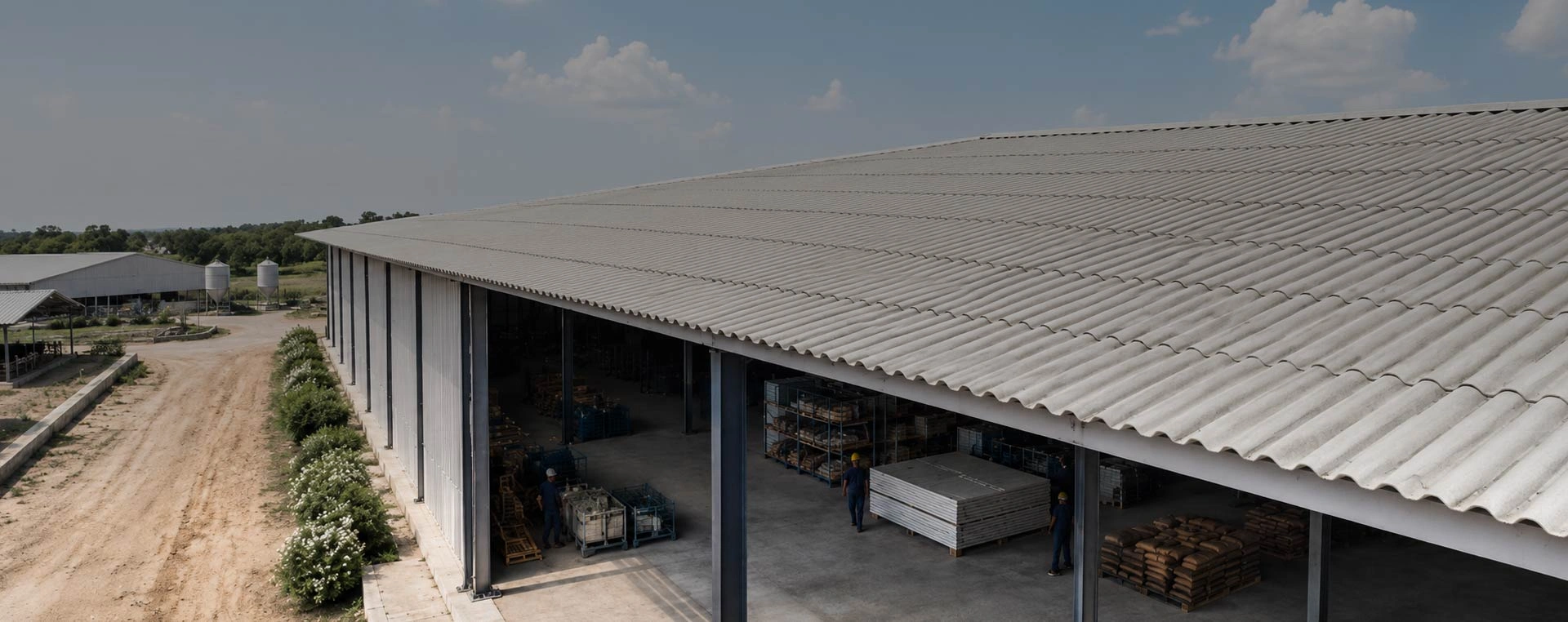
Warehouses and godowns
Warehouses and godowns need dependable roofing that protects the interiors while helping manage heat build-up. This is particularly important in spaces where employees work for long hours or where goods, equipment and materials are stored.
Roofing with good thermal performance can help create more manageable indoor conditions while supporting long-term durability and weather protection.
Poultry farms
Poultry sheds require roofing that helps limit heat entry, reduce external noise and work effectively with the ventilation system.
The roofing material should also withstand seasonal weather and provide reliable coverage across large shed areas. A well-planned roof can contribute to a more stable and comfortable environment inside the farm.
Dairy farms and cattle sheds
Dairy farms and cattle sheds need durable roofing with suitable thermal performance and low maintenance requirements.
The roof should protect livestock, feed and daily farm operations from direct sun and rain while supporting adequate ventilation.
Charminar BirlaNu UltraCool Fiber Cement Roofs are well suited to such applications where cooler interiors and dependable weather protection are priorities.
Factories, workshops and utility structures
Factories, garages, parking sheds, workshops and small manufacturing units need roofing that balances strength, thermal insulation, fire resistance and sound control.
The final choice should reflect the activity carried out inside the building and its structural design. A roof suitable for a basic storage shed may not meet the requirements of a facility that generates internal heat or houses specialised machinery.
Buying guide: How to choose the right roofing sheets
Assess the building’s purpose
Start by identifying what the roof needs to protect and how the space will be used. Consider employees, machinery, stored goods, livestock and operating hours before selecting the material.
A storage facility may prioritise durability and weather resistance, while a livestock shed may need better thermal and sound insulation.
Consider the local climate
Review the summer temperature, rainfall, humidity and wind exposure in the area.
Buildings in hot regions may require roofing with better thermal performance. Wet or humid regions need materials that manage moisture and corrosion effectively, while high-wind locations require suitable structural support, fastening and sheet overlap.
Check the product specifications
Do not compare roofing sheets by appearance or price alone. Review the material, thickness, length, effective coverage, weight, surface treatment and recommended use.
Charminar BirlaNu UltraCool Fiber Cement Roofs are available in lengths from 1 metre to 4.25 metres, with a width of 1050 mm and a thickness of 6 mm.
Calculate the complete installed cost
The total cost should include the roofing sheets, ridges, washers, fasteners, structural supports, transport, labour and future maintenance.
A lower sheet price may not provide better value if the roof increases cooling requirements, needs frequent repairs or requires early replacement. Comparing the complete lifecycle cost gives buyers a clearer view of long-term value.
Prioritise correct installation
Even a high-quality fiber sheet for roof applications needs the correct slope, overlap, fastener spacing and structural support. Poor workmanship can lead to sheet movement, cracks, damage or water entry.
Use compatible accessories and follow the recommended installation process. Charminar BirlaNu also offers roofing tools and accessories that support proper sealing, fastening and structural installation.
Verify product performance
Review whether the roofing material has been tested for the performance claims that matter to the building.
Charminar BirlaNu UltraCool Fiber Cement Roofs have an SRI of 99 and are designed to help reduce indoor temperatures by up to 8°C. Buyers should also assess thermal behaviour, fire resistance, corrosion resistance, weather performance and suitability for the intended application when comparing any roofing sheet solution.
Why consider Charminar BirlaNu UltraCool Fiber Cement Roofs?
Charminar BirlaNu UltraCool Fiber Cement Roofs combine the strength and durability of fibre cement with a specialised surface that helps reduce solar heat entering the building.
The sheets are suitable for warehouses, godowns, poultry farms, dairy farms, residences and other covered structures where thermal comfort, durability and weather resistance are important.
The final performance of any roof also depends on the complete building design. Roof height, ventilation, orientation, structural support and installation quality all influence the indoor environment.
Explore Charminar BirlaNu roofing solutions
Looking for roofing sheets suited to different industrial, agricultural and residential requirements? Explore the complete Charminar BirlaNu roofing range and discover the benefits of UltraCool Fiber Cement Roofs.
Conclusion
The best roofing solution for an industrial building is one that supports how the space is used. Strength and cost are important, but thermal comfort, weather resistance, safety, sound insulation and maintenance should also guide the decision.
For warehouses, godowns, poultry farms, dairy farms and utility structures in hot climates, roofing that helps reduce heat gain can improve indoor conditions and make the space more practical to use.
Careful product selection, accurate cost planning and professional installation can help the roof deliver reliable performance over the long term.
FAQs
Which roofing sheets are best for industrial buildings?
The right roofing sheets depend on the building’s purpose, climate, roof structure and operating conditions. Buyers should compare durability, thermal insulation, fire resistance, corrosion resistance, maintenance and installation requirements.
Are fibre cement sheets suitable for warehouses and godowns?
Yes. Fibre cement sheets can provide durable coverage along with thermal and sound insulation. They should be installed with the correct slope, overlap, fastening and structural support.
How do Ultracool Fiber Cement Roofs keep interiors cooler?
Their high-reflectance surface helps limit solar heat gain through the roof. Charminar BirlaNu UltraCool Fiber Cement Roofs have an SRI of 99 and can help reduce indoor temperatures by up to 8°C.
What should I check before buying a fiber sheet for roof construction?
Check the material, dimensions, thermal performance, weather resistance, fire resistance, installation method, compatible accessories and manufacturer support.
Are Ultracool Fiber Cement Roofs suitable for poultry and dairy farms?
Yes. They are suitable for poultry farms and dairy farms where thermal comfort, durability, sound insulation and weather protection are important considerations.