Traditional cement mortar, once the backbone of construction, is struggling to meet the demands of modern homes. Today’s buildings use larger format blocks, faster construction schedules, and higher structural expectations, which place more stress on conventional mortars. As a result, walls built with traditional cement mortar often develop cracks, uneven bonding, and hollow spots, leading to reduced durability and frequent maintenance issues. Over time, this can compromise both the strength and appearance of walls, making them less reliable for long-term use.
Did you know? Conventional cement mortar can shrink up to 8–10% as it cures, which contributes to cracks and weak joints, especially in high-rise and large-format constructions.
A simple solution is to adopt modern, polymer-enhanced mortars that deliver stronger adhesion, reduced shrinkage, and faster application, ensuring walls remain stable and durable in today’s construction environment.
How traditional cement mortar falls short in modern construction
Conventional cement mortars were designed for older construction methods and smaller masonry units. In today’s fast-paced building projects, they often struggle to meet performance demands.
1. Conventional cement mortar shrinks and cracks over time
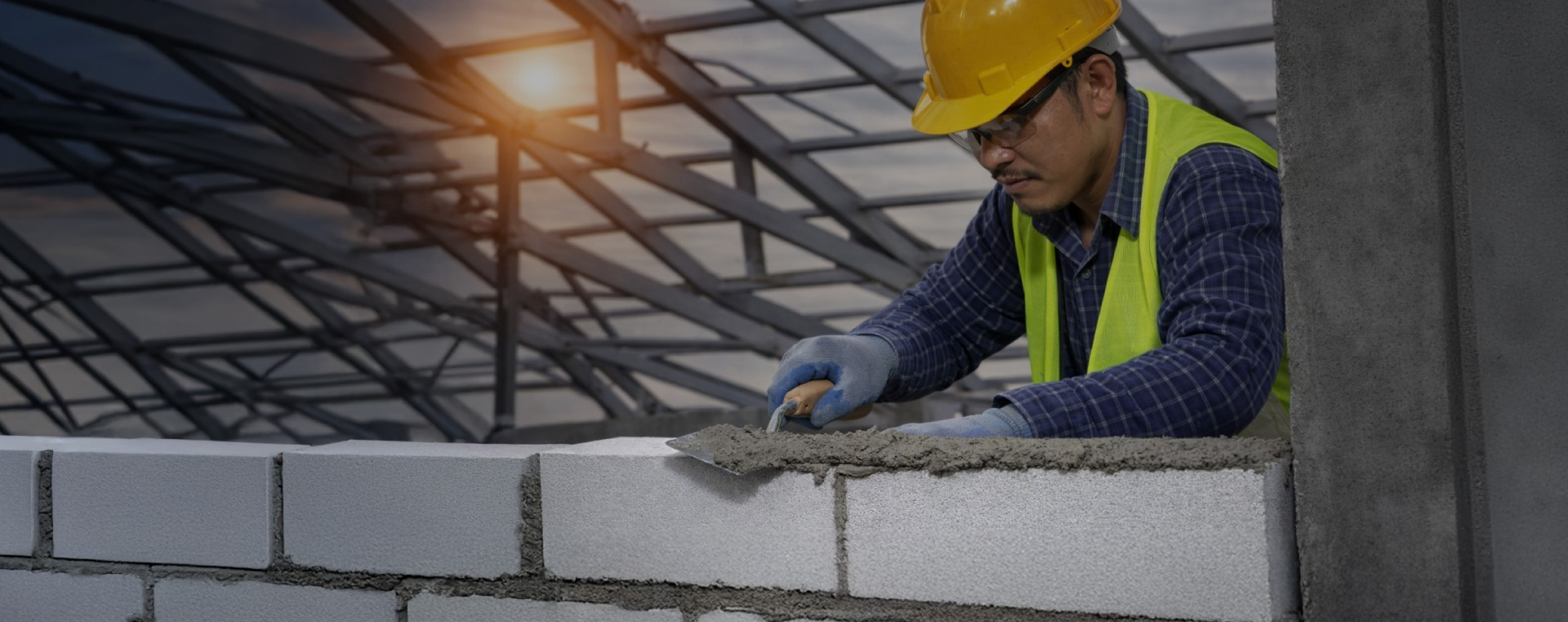
Traditional cement mortar loses moisture as it cures, which leads to shrinkage and cracking along joints. In modern construction, where large-format blocks and AAC blocks are commonly used, this shrinkage becomes more critical. Even small cracks can weaken wall integrity, allow moisture penetration, and affect surface finishes applied later. Over time, these cracks can spread, reducing the overall lifespan of the structure.
2. Inconsistent bonding strength causes weak joints
Another key limitation of traditional cement mortar is inconsistent bonding strength. Manual mixing, variation in material quality, and thicker joint applications often result in uneven adhesion between blocks. This can lead to hollow sounds, weak joints, and poor load distribution across walls. Such weaknesses make walls more susceptible to stress, vibration, and environmental changes, increasing the likelihood of repairs and long-term maintenance.
3. Modern polymer-enhanced block jointing mortars offer a better alternative
Modern polymer-enhanced
block jointing mortars are specifically engineered to address the limitations of conventional cement mortar. Polymer modification improves adhesion, reduces shrinkage, and allows for thin-bed application, resulting in stronger and more uniform joints. Faster setting times support efficient construction schedules, while thinner joints enhance wall stability and structural performance. The outcome is a cleaner finish, fewer cracks, and walls that are better suited to the demands of modern homes.
How traditional cement mortar compares with modern jointing solutions
| Aspect |
Why traditional cement mortar falls short |
Why modern jointing mortars perform better |
| Impact on daily living |
Leads to visible cracks, damp patches, and frequent repairs over time. |
Maintains cleaner walls with fewer cracks and reduced maintenance. |
| Compatibility with modern materials |
Designed for smaller bricks and thick joints, not large format or AAC blocks. |
Engineered for precision blocks and thin-bed masonry systems. |
| Consistency on site |
Performance varies due to manual mixing and workmanship dependency. |
Factory-controlled formulations ensure uniform bonding. |
| Construction efficiency |
Requires longer curing and careful handling. |
Enables faster application and quicker project completion. |
| Long-term cost |
Lower initial cost but higher repair and maintenance expenses. |
Higher durability reduces lifetime ownership costs. |
| Alignment with modern standards |
Struggles to meet today’s speed and durability expectations. |
Matches current construction practices and performance needs. |
Conclusion
As construction methods evolve, relying on traditional cement mortar can limit the long-term performance of modern homes. Cracking, uneven bonding and higher maintenance are common outcomes when older materials are used with today’s larger blocks and faster build cycles.
Adopting modern polymer-enhanced jointing mortars provides stronger adhesion, improved stability and better durability, helping walls perform reliably over time. Choosing the right mortar is no longer just a construction choice, but a long-term investment in the strength and quality of your home.
FAQs
Why does traditional cement mortar crack in modern construction?
Traditional cement mortar shrinks as it cures, which can lead to cracks when used with large-format or AAC blocks.
Is cement mortar suitable for fast-paced construction projects?
Not always. Longer curing times and thicker joints can slow progress and affect consistency.
Do polymer-enhanced mortars improve wall durability?
Yes. They help create uniform joints that better resist cracks and structural stress.
How are modern block jointing mortars different from cement mortar?
They offer stronger bonding, reduced shrinkage and thin-bed application for improved stability.