Key takeaways:
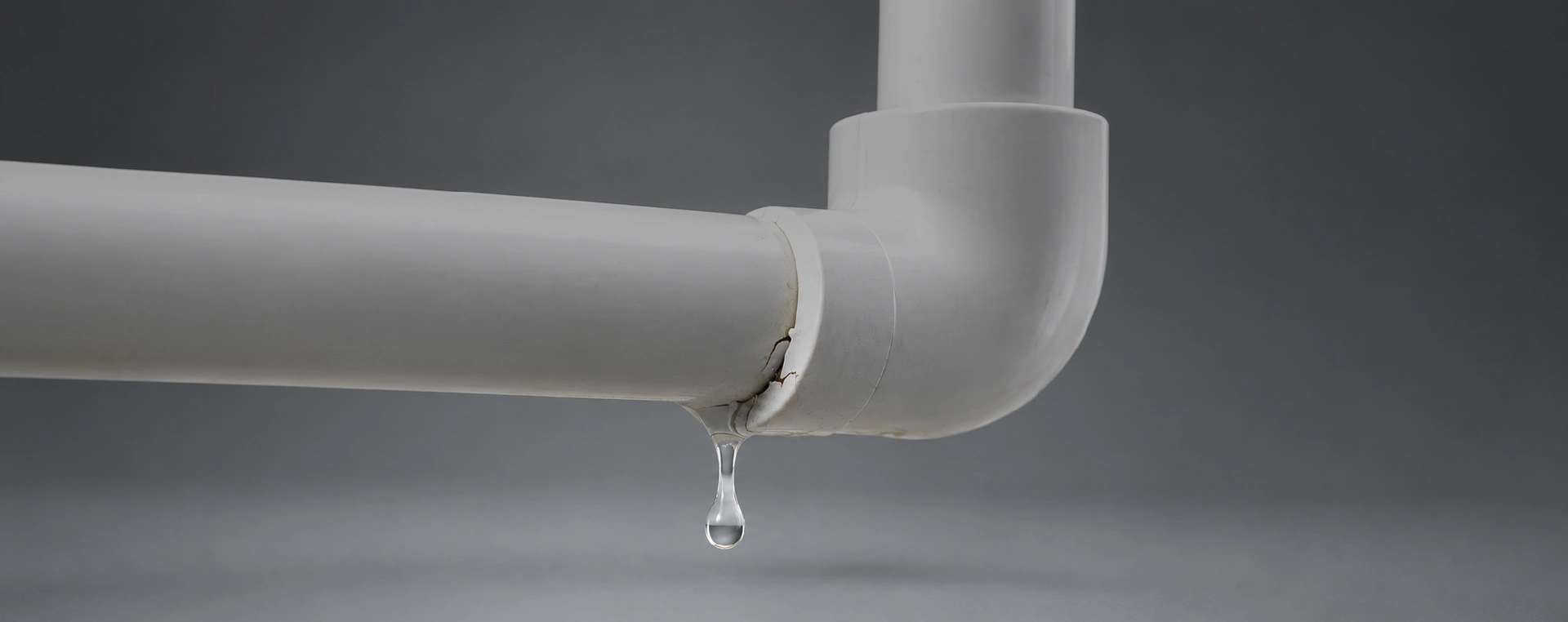
- Leakage often starts at joints, connections and fittings rather than in an undamaged section of pipe.
- The right pipe and fitting combination matters as much as correct installation.
- Uneven cuts, burrs, dirt, moisture and poor alignment can weaken a joint.
- Solvent cement should be compatible with the pipe system and applied according to the manufacturer's instructions.
- Pipes need suitable support and allowance for movement where temperature changes can occur.
- Pressure testing before concealment can catch problems before they become expensive repairs.
A plumbing system usually gets attention only when something goes wrong. A damp patch, a drop in water pressure or a puddle under a sink can point to a problem that started much earlier - often at a pipe joint.
Leakage is not always a pipe problem. The weak point is often the connection between the pipe and fitting. A joint that looks fine on installation day can become a leak point later if the pipe was poorly cut, the fitting was misaligned or the joint was put under unnecessary stress.
That makes good installation about more than getting the pipes in place. It is about creating a plumbing system where every connection works as intended.
Whether you are building a new home, renovating an old one or specifying a system for a larger project, here are the common pipe fitting mistakes worth avoiding.
1. Choosing pipes and fittings as separate purchases
One of the easiest mistakes is to choose the pipe first and work out the fittings later. A plumbing network is a connected system. The pipe, fitting and joining method all have to work together.
Nominal size alone does not tell you everything. The intended application, pressure conditions, temperature, material compatibility and joint design all matter. Even when two components appear to have the same size, differences in dimensions or joint design can affect how securely they connect.
A better approach is to consider the complete system, including the pipes and fittings, from the planning stage itself.
What to check:
- Match the application: Ensure the pipe material is suitable for the type of water, temperature and pressure the system will handle.
- Check compatibility: The pipe fittings should be designed to work with the selected pipe and joining method.
- Verify specifications: Check pressure ratings, dimensions and installation requirements before purchasing the components.
- Avoid mixing systems: Do not assume that pipes and fittings from different systems will always provide the intended fit or performance.
2. Overlooking how the pipe has been cut
A pipe may eventually disappear behind a wall, but the quality of the cut can have a direct impact on the joint. An uneven or angled cut can prevent the pipe from seating correctly inside the fitting and may affect the quality of the connection.
For a homeowner or project decision-maker, this is not about picking up a pipe cutter. It is about making sure the plumbing team is following the right installation practices before the joints are concealed.
What to ensure:
- The pipe is cut square: Ask the plumbing team to use the appropriate cutting tool and ensure the cut is clean and straight.
- The pipe end is checked: Cracks, deformation or damage should be identified before the pipe is connected to a fitting.
- Burrs are removed: Rough edges and debris left after cutting should be properly removed before joining.
- Installation is not rushed: Where several pipes and fittings need to align, accurate measurement and preparation can help avoid unnecessary strain on the connections.
3. Allowing dirt or moisture into the joint
Plumbing work often happens alongside masonry, tiling, plastering and other activities. This means pipes and fittings can easily be exposed to dust, cement residue, grease and moisture during construction.
If these contaminants remain on the joining surfaces, they can interfere with the connection and potentially affect long-term joint performance.
A homeowner may never see the joint once the wall is closed, which makes it important to ensure the installation team is following proper preparation procedures while the work is being carried out.
What to ensure:
- Joining surfaces are clean: The plumbing team should clean the pipe and fitting before making the connection.
- Surfaces are dry where required: Moisture should not be allowed to compromise the specified joining method.
- Open pipe ends are protected: Unused pipes should be covered or otherwise protected from construction debris.
- Preparation follows the system requirements: The installer should follow the manufacturer's recommended preparation procedure.
4. Using the wrong joining material or applying it incorrectly
For systems that use solvent cement, the joining material is an important part of the connection. Different pipe materials and systems may require specific solvent cements, primers and application procedures.
For the person supervising a project, the important question is not how the cement is applied but whether the plumbing team is using the right product and following the specified process.
A joint can look properly finished from the outside and still be compromised if the wrong joining material was used or the connection was disturbed before it had sufficiently cured.
What to ensure:
- The recommended product is being used: Check that the solvent cement and primer are suitable for the selected pipe system.
- The manufacturer's process is followed: Application and assembly should be carried out according to the specified instructions.
- Joints are given adequate curing time: The system should not be put into service before the recommended curing period.
- Different materials are not mixed casually: The compatibility of the pipe, fitting and joining system should be established before installation.
5. Forcing pipes and fittings into alignment
A plumbing route does not always go exactly as planned on site. Changes in walls, beams, fixtures or other services can sometimes affect the intended pipe route.
The problem starts when the pipe and fitting are forced into position simply to make the connection work. Pulling, twisting or pushing pipework into alignment can place unnecessary stress on the joint.
This is something architects, consultants and homeowners can spot during inspection by looking at whether the installation appears natural and properly supported rather than under visible tension.
What to ensure:
- The route is planned before installation: Pipe runs should account for walls, fixtures and other services wherever possible.
- Appropriate fittings are used: Elbows, tees and adapters should be selected to suit the required route instead of forcing the pipe into position.
- Connections are not under visible strain: Pipes should not appear bent, twisted or pulled tightly into a fitting.
- Changes are resolved properly: Unexpected site conditions should be addressed through an appropriate design or routing solution rather than an improvised connection.
6. Not accounting for pipe movement
Pipes can expand and contract as temperatures change. This can be particularly relevant in hot-water installations and areas exposed to substantial temperature variations.
The installer needs to account for this movement when routing and supporting the system. Otherwise, repeated expansion and contraction can place additional stress on pipework and fittings over time.
For a homeowner or project supervisor, this is another aspect that should be considered during design review and installation checks rather than after the plumbing is concealed.
What to ensure:
- The operating conditions are understood: The plumbing design should consider the temperature range the system is expected to experience.
- Provision is made for movement: The installation should follow the pipe manufacturer's recommendations for expansion and contraction.
- Supports allow the required movement: Pipe supports should secure the system without unnecessarily restricting movement.
- Long pipe runs receive attention: Longer sections may require specific provisions to manage thermal movement.
7. Installing inadequate pipe supports
Pipework should not rely on joints and fittings to carry the entire load of the system. Poorly supported pipes can sag, shift or transfer unnecessary loads to connections.
This becomes particularly important around bends, branches, valves and other points where additional weight or movement may be present.
It is something that consultants, architects and homeowners can raise during an installation review by checking whether the pipework is properly supported and routed before the system is concealed.
What to ensure:
- Support is provided at appropriate intervals: The spacing should be suitable for the pipe material, diameter and installation conditions.
- Heavy components receive additional support: Valves and other concentrated loads should not unnecessarily load the pipe joints.
- Supports do not damage the pipe: Clamps and supports should secure the pipe without causing deformation or abrasion.
- Concealed pipework is not overlooked: Pipes inside walls, ceilings or shafts should receive the same attention as exposed sections.
8. Closing the wall before testing the plumbing
A leaking joint is relatively straightforward to access when the pipework is exposed. Once the same pipe is covered with tiles, plaster, flooring or a false ceiling, locating and repairing the leak can become much more disruptive and expensive.
Testing before concealment gives the project team an opportunity to identify weak connections while the pipework is still accessible. For homeowners, architects and consultants, one simple question can make a difference: Has the piping system been tested before the finishing work begins?
What to ensure:
- Testing is completed before concealment: The required pressure or leak testing should be carried out while the pipework remains accessible.
- All joints are inspected: Elbows, tees, couplings and fixture connections deserve particular attention.
- Any issue is rectified before finishing: Suspected leaks or pressure-related concerns should be addressed before the wall or floor is closed.
- Testing is documented where required: On larger projects, maintaining records can make future inspection and maintenance easier.
Choosing the right pipe solution
Good installation practices are essential, but they work best when paired with a system designed to reduce the risk of connection-related problems. For homeowners, architects and consultants, this means looking beyond the individual pipe and considering how the complete system is designed to work together.
BirlaNu Leakproof Pipes use TruFiT Technology to provide precision-engineered compatibility between pipes and fittings for leakproof joints. With a range of pipe solutions for plumbing and sanitation, agriculture, and industrial and infrastructure applications, BirlaNu offers an integrated approach to dependable piping performance.
Choosing the right pipe solutions is therefore not simply about selecting a material or diameter. It is about considering the complete system, including how the pipes, pipe fittings and joining methods are designed to perform together.
Conclusion
Preventing pipe leakage comes down to getting the fundamentals right - choosing compatible pipes and fittings, ensuring proper installation and checking the system before it is concealed. For homeowners, architects, consultants and builders, paying attention to these details can help avoid unnecessary repairs and ensure more dependable plumbing performance.
Choosing a well-engineered pipe solution such as BirlaNu Leakproof Pipes can further support this approach, with pipes and fittings designed to work together for reliable, leakproof connections. A combination of the right products and correct installation practices can help create a plumbing system built for lasting performance.
FAQs
What are the most common causes of pipe leakage?
Pipe leakage can result from several installation issues, including poor alignment, uneven pipe cutting, contaminated joining surfaces, incorrect joining materials, inadequate support and insufficient testing before the system is concealed. Many leaks develop at joints and connections rather than along an undamaged section of pipe.
How can homeowners check whether plumbing has been installed correctly?
Homeowners can ask the installer or project team whether compatible pipes and fittings are being used, whether the system has been tested before concealment and whether the installation follows the manufacturer's recommendations.
How does TruFiT Technology help prevent pipe leakage?
TruFiT Technology is designed to provide precise tolerances between pipes and fittings, helping achieve better alignment and leakproof joints. It is a core feature across BirlaNu's pipe portfolio.
Why is it important to use compatible pipes and fittings?
Pipes, fittings and joining methods are designed to work as a system. Even components with the same nominal size may differ in dimensions, pressure ratings or joint design. Using compatible components helps ensure proper fit, alignment and joint performance.
Why is pressure testing important before concealing pipework?
Testing while the pipework is still accessible can help identify leaking or weak joints before they are covered by plaster, tiles, flooring or ceilings. Addressing problems at this stage can make repairs considerably easier than after the finishing work is complete.