

4 minutes read
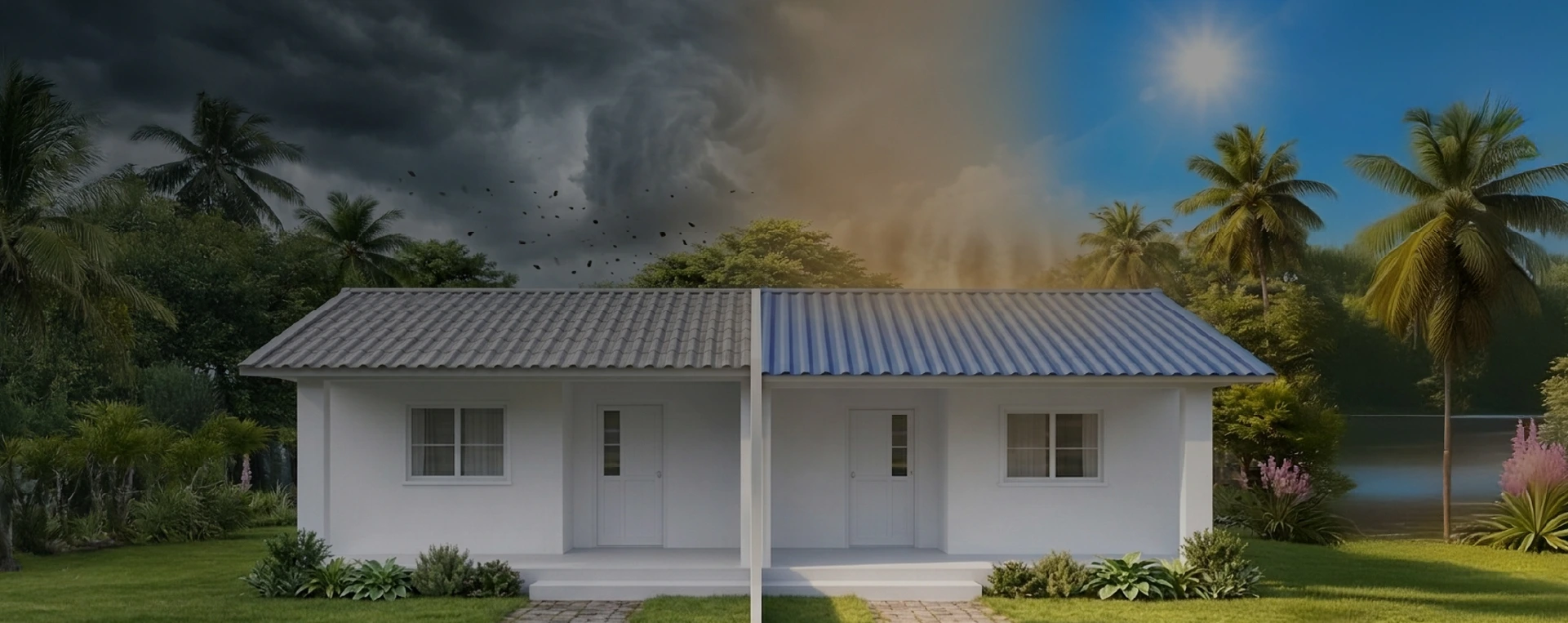
India’s climate places unique demands on building materials. From extreme summer heat to intense monsoons and cyclone-prone regions, roofing systems must do more than just provide cover. They must regulate temperature, resist water penetration, and withstand strong winds over time.
This makes selecting the right roofing sheets a critical decision for homeowners and builders looking to ensure durability, comfort, and low maintenance.
Roofing performance is not determined by material alone. It depends on how well the sheet responds to environmental stress such as heat absorption, moisture exposure, and wind pressure.
The most commonly used roofing sheets in India include:
Each offers distinct advantages depending on climate conditions and project requirements.
Fiber cement roofs are widely used across residential and semi-industrial applications due to their durability and balanced performance.
Key advantages:
These properties make fiber cement roofs a strong choice for regions with both high temperatures and heavy rainfall.
BirlaNu fiber cement roofs are designed to deliver consistent performance across such conditions, supporting long-term efficiency and comfort.
Steel roofs are known for their high strength and lightweight structure, making them suitable for a wide range of applications.
Key advantages:
In hot climates, steel roofs may require insulation or reflective coatings to reduce heat transfer and improve indoor comfort.
BirlaNu steel roofs are engineered to combine durability with design flexibility, making them suitable for both residential and commercial use.
Verdict: Fiber cement roofs are generally more effective in managing heat.
Verdict: Installation quality plays a key role in performance.
Verdict: Proper anchoring and accessories are critical for durability.
Material quality and system design play a crucial role in long-term roofing performance. BirlaNu roofing solutions are developed to support durability, ease of installation, and reliability across varying weather conditions.
This range allows builders and homeowners to select roofing sheets based on specific project and climate requirements without compromising on performance.
Selecting suitable roofing sheets depends on:
A well-informed decision ensures better performance and reduces future repair costs.
Avoiding these mistakes helps improve durability and long-term performance.
Selecting the right roofing sheets for Indian weather requires balancing heat resistance, moisture protection, and wind performance.
Fiber cement roofs offer a reliable solution for thermal comfort and durability, while steel roofs provide strength and faster installation when paired with proper insulation.
The right choice depends on climate conditions and application needs, but a well-planned roofing system will always deliver better protection and long-term value.
Which roofing sheets are best for hot weather in India?
Fiber cement roofs are generally better suited for hot climates due to their ability to reduce heat transfer and maintain indoor comfort.
Do steel roofs make homes hotter?
Steel roofs can increase heat absorption if installed without insulation or reflective treatment. Proper thermal solutions can significantly improve performance.
What is the difference between fiber cement roofs and steel roofs?
Fiber cement roofs offer better insulation and moisture resistance, while steel roofs are lighter, stronger, and faster to install.
Are roofing sheets suitable for heavy rainfall areas?
Yes, both fiber cement and steel roofs perform well in high rainfall when installed with proper slope, overlap, and sealing.
Which roofing sheets are better for high-wind areas?
Both options can perform effectively, but durability depends on secure fastening, proper anchoring, and correct installation practices.
Protect metal surfaces from rust, corrosion, and long-term environmental damage.
-i - 26/05/2026
Build a stronger and smoother wall surface with the right base preparation.
- - 26/05/2026
Durable construction solutions for modern building needs.
- - 26/05/2026
How exterior primer improves paint durability and protection.
- - 26/05/2026
