Key takeaways
- Select agricultural pipes according to the water source, irrigation method and farm layout.
- Choose the pipe diameter and pressure class based on the required flow and pump pressure.
- Use casing pipes to support the borewell and column pipes to lift water through submersible pumps.
- Install an underground water pipe with suitable bedding, jointing and protection.
- Use compatible pipes and fittings to reduce leakage and pressure loss.
- Test the complete irrigation pipeline before regular operation.
A farmer may have a dependable borewell and a powerful pump, yet water may still fail to reach every part of the field at the required pressure. The problem is often not the water source but the pipeline connecting it to the crops.
A pipe that is too narrow can restrict flow, while one with an unsuitable pressure rating may develop leaks or fail prematurely. Poor joints, incorrect installation and the wrong borewell components can further affect the performance of the irrigation system.
Choosing an agriculture pipe is therefore not a one-product decision.
Farmers need coordinated pipe solutions for extracting groundwater, transporting it under pressure and distributing it across the farm.
Begin with the source of irrigation water
The right irrigation system begins with understanding where the water comes from. Farms may receive water from borewells, canals, reservoirs, ponds or storage tanks. The source affects the type of pipe, pump and distribution network required.
Where groundwater is extracted through a borewell, the system generally requires more than an agriculture PVC pipe for field distribution. It also needs casing pipes to protect the borewell and column pipes to connect the submersible pump to the surface.
BirlaNu Casing Pipes are designed for shallow, medium and deep borewell applications. The range includes plain, ribbed and screen or slotted pipes, helping provide support and protection within the borewell. Their threaded ends allow secure joining without requiring solvent cement at the connection.
Selecting the casing pipe according to the borewell depth, soil conditions and drilling design helps create a more stable water source for irrigation.
Use the right column pipe for lifting water
Once the borewell has been prepared, water must be lifted to the surface through a submersible pump. This is where column pipes perform an important role.
A column pipe is connected to the pump and remains suspended inside the borewell. It must withstand the pump load, water pressure and the depth from which water is being lifted.
BirlaNu Column Pipes are designed for submersible pumps used in shallow, medium and deep borewells. They feature threaded connections, high tensile strength and resistance to corrosion, chemicals and algae.
The column pipe category should be selected according to the installation depth and pump capacity. Using a pipe that is not designed for the required depth may affect the reliability of the entire water-lifting system.
Match the pipe to the irrigation method
After water reaches the surface, it must be transported to different sections of the farm. The appropriate pipe solutions depend on whether the farm uses surface irrigation, sprinklers, drip irrigation or a combination of methods.
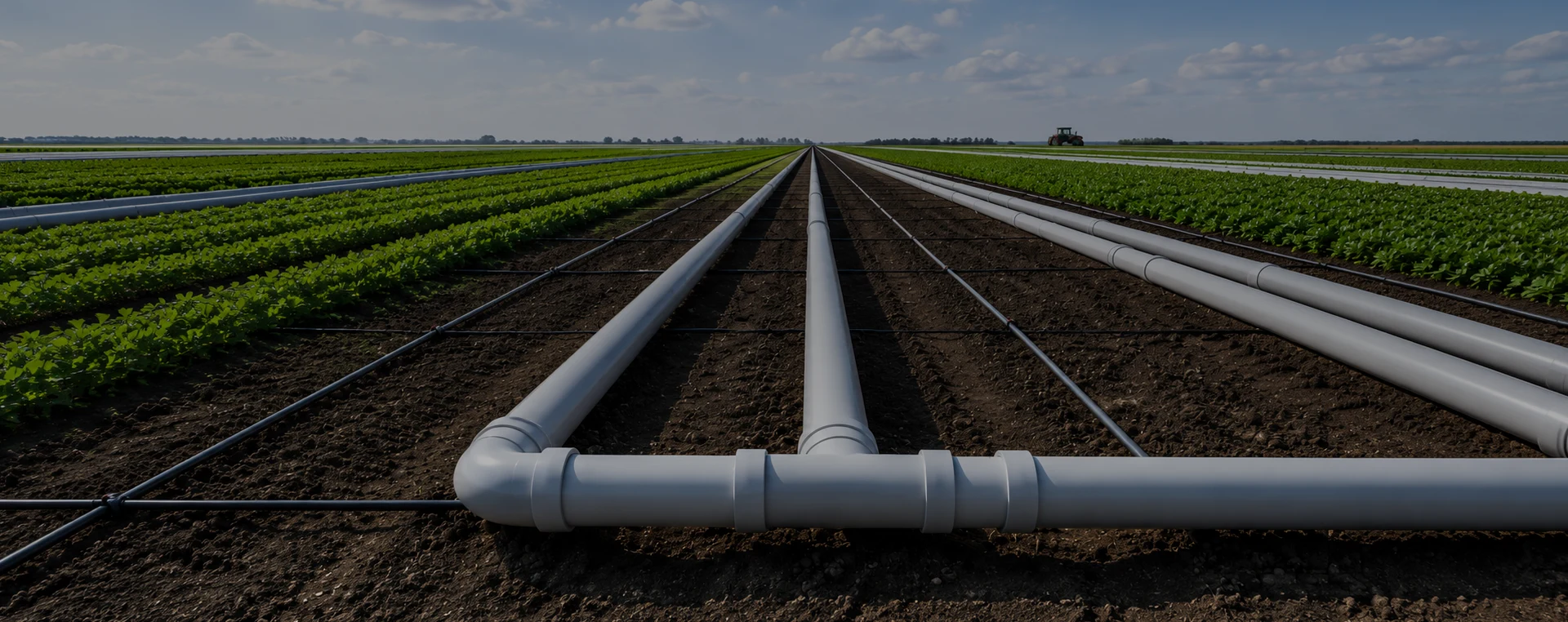
Pressure pipes can be used as mainlines and sub-main lines to carry water from the source towards the fields. An agriculture PVC pipe is commonly considered for irrigation networks because it is lightweight, corrosion-resistant and available in different diameters and pressure classes.
BirlaNu Pressure Pipes and Fittings are designed for agriculture, irrigation and water supply applications. The range is available across multiple sizes and pressure classes, allowing the system to be selected according to its flow and pressure requirements.
The downstream network may then connect to sprinkler lines, drip laterals, hydrants or field outlets depending on the irrigation design.
Select the correct pipe diameter
Pipe diameter has a direct effect on water movement.
A pipe that is too small may increase friction loss, causing pressure to fall before water reaches the farthest outlet. A pipe that is unnecessarily large may increase the initial cost of the system.
The required size depends on:
- The amount of water needed
- The length of the pipeline
- The number of outlets operating together
- Changes in ground elevation
- Pump capacity and operating pressure
- The selected irrigation method
Water velocity should also remain within the range recommended by the irrigation designer. Higher velocity can increase friction loss, water hammer and movement within the pipeline.
Instead of using the same diameter throughout the farm, the main lines, sub-main lines and field connections should be sized according to the water they need to carry.
Check the pressure rating
Every agriculture pipe has a pressure limit. The selected pressure class should be able to handle the normal operating pressure as well as temporary pressure changes caused by starting pumps, closing valves or changing irrigation zones.
BirlaNu Pressure Pipes are available in different pressure classes for varied water supply and irrigation requirements. Their applications include agricultural farms, potable water supply and irrigation systems.
A higher pressure class should not be selected only on assumption. Pump pressure, elevation differences, pipe length and irrigation equipment should be assessed together by a qualified irrigation professional.
Pressure-regulating valves or other control devices may also be required where different areas of the farm operate at different pressures.
Plan underground water pipe installation carefully
Installing the mainline underground helps protect it from farm machinery, movement across the field and prolonged exposure at the surface. However, the performance of an underground water pipe depends heavily on how it is laid.
The pipeline route should avoid unnecessary bends and areas where future excavation is likely. The trench should provide stable support without sharp stones or objects that could damage the pipe.
During installation:
- Prepare a level and suitable trench bed
- Align pipes before completing the joints
- Use compatible fittings and jointing materials
- Provide support around bends and changes in direction
- Protect the pipeline from excessive external loads
- Mark or record the route for future maintenance
- Test the pipeline before filling the trench completely
The required burial depth should be determined according to pipe size, soil conditions, vehicle movement and the project design. Installing an underground water pipe without considering these factors can lead to damaged joints or difficult repairs later.
Give fittings and joints equal importance
A reliable pipeline requires more than a durable pipe. Elbows, tees, couplers, reducers and other fittings help redirect or divide the water flow across the irrigation network.
Using mismatched fittings may lead to poor alignment and leakage. The pipe, fitting and solvent cement should be compatible and installed according to the recommended process.
BirlaNu Pressure Pipes and Fittings feature TruFiT Technology, designed to support precise alignment and leakproof joints. The range also offers resistance to corrosion, chemicals and abrasion for agriculture and water supply applications.
Reducing unnecessary joints can further improve system reliability and make maintenance simpler.
Consider field conditions
Agricultural pipelines may be exposed to sunlight, fertilisers, chemicals, soil movement and changing temperatures. The selected pipe should be suitable for the environment in which it will operate.
Exposed pipes should be properly supported and protected from impact. Buried pipelines should be installed with appropriate soil cover and clearly marked. The system should also include flushing points so that sediment can be removed before it accumulates inside laterals or emitters.
Where irrigation water contains sand or suspended particles, a suitable filtration system may be required. Filters help protect valves, sprinkler nozzles and drip emitters from blockage.
Build a complete irrigation pipeline
Choosing the right agriculture PVC pipe is only one part of irrigation planning. The borewell, pump, column pipe, casing pipe, pressure pipeline, fittings and irrigation outlets must work as one connected system.
The BirlaNu Agriculture Pipes range brings together Pressure Pipes and Fittings for irrigation distribution, Column Pipes for submersible pumps and Casing Pipes for borewell applications. These pipe solutions are designed to support water extraction and distribution across different farming requirements.
Selecting products according to the actual application can help maintain water flow, reduce leakage and improve the long-term performance of the irrigation network.
Conclusion
The right irrigation solution should move water reliably from its source to the crops without unnecessary pressure loss, leakage or frequent maintenance.
Casing pipes help support the borewell, column pipes lift underground water and pressure pipes distribute it across the farm. The diameter, pressure rating and installation method of every agriculture pipe should be selected according to the water demand, pump capacity and field layout.
By combining suitable BirlaNu pipe solutions with proper design and installation, farmers can create an efficient irrigation network that supports dependable water delivery across the field.
FAQs
What is the difference between casing and column pipes?
Casing pipes support and protect the borewell. Column pipes connect to submersible pumps and carry underground water to the surface.
How do I choose the right irrigation pipe size?
The pipe size depends on water demand, pipeline length, pump pressure, elevation and the number of outlets operating at the same time.
How do I choose the right agriculture pipe?
Choose the pipe based on water source, flow requirement, pump pressure, field layout and irrigation method.
Which pipe is used with a submersible pump?
Column pipes connect the submersible pump to the surface and carry groundwater upwards.
How can leakage in an irrigation pipeline be reduced?
Use compatible pipes and fittings, follow the correct jointing process and test the pipeline before regular use.