Wall cracks in new constructions are a common problem, and one of the main reasons is the type of bonding material used between blocks. When building with AAC blocks, which are lightweight and highly insulating, the way the blocks are joined together plays a crucial role in the wall’s strength. If the joints are uneven, too thick, or filled with regular sand-cement mix, gaps and weak spots can form. Over time, these weak spots allow the wall to move slightly due to temperature changes, shrinkage, or natural settling, resulting in visible cracks.
Using the right block jointing mortar solves this problem. Unlike ordinary mixes, it is specially formulated for AAC blocks, creating a strong, uniform bond across the wall. It fills microscopic gaps between blocks, holds them tightly together, and keeps the joints thin. This ensures the wall remains stable, smooth and crack-free even as the building settles or experiences changes in temperature. In short, the right mortar is not just a filler - it is the key to building strong, long-lasting walls that look good and perform well over time.
What is block jointing mortar?
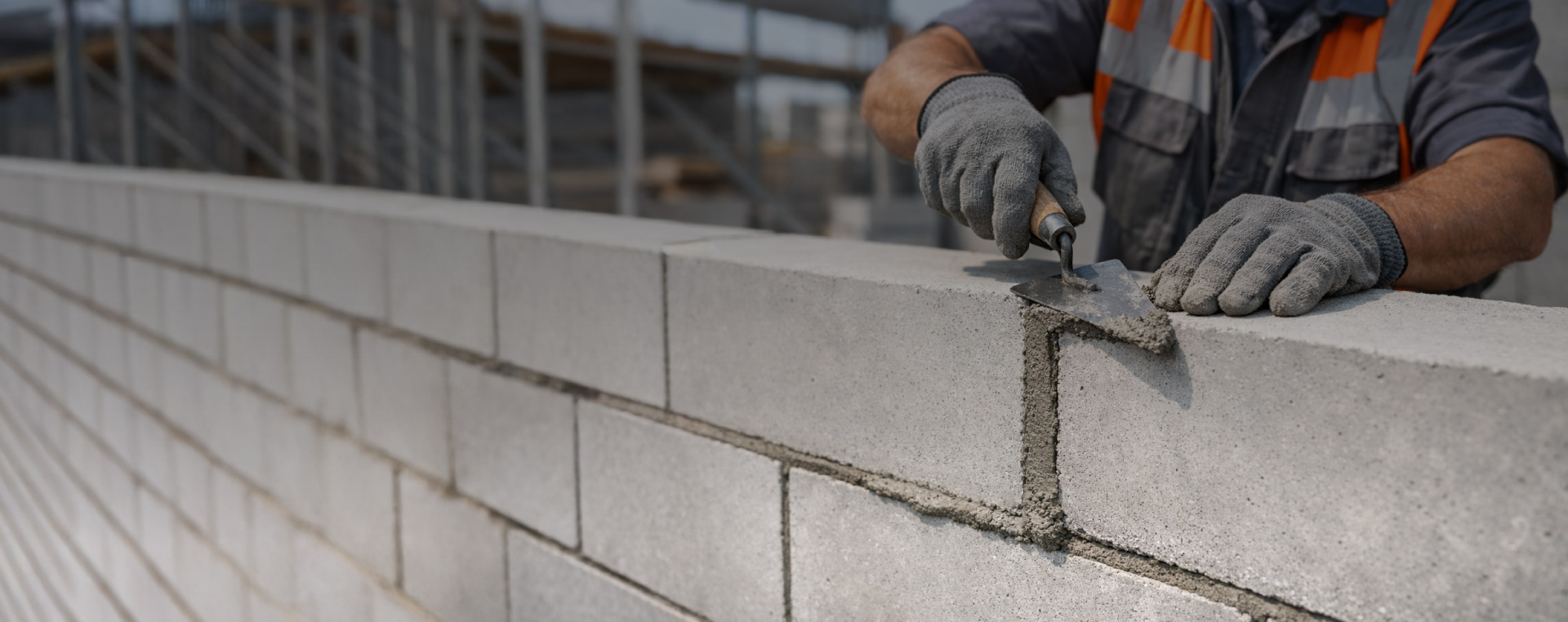
Block jointing mortar is a specially formulated adhesive designed for use with
AAC blocks. Unlike traditional sand-cement mixes, it is engineered for thin-bed application, creating uniform joints between blocks. This uniformity prevents weak spots in the wall that could later develop into cracks. Its composition provides better workability, stronger bonding and faster application, making it ideal for both residential and commercial projects.
How AAC block jointing mortar prevents wall cracks
One of the key reasons walls crack is uneven bonding between blocks. Gaps or inconsistencies in joints allow movement and shrinkage, which can result in visible cracks over time. Using a high-quality product like BirlaNu Block Jointing Mortar forms a strong, continuous bond that fills microscopic gaps and creates a seamless wall structure. Its thin-bed application reduces shrinkage, which is particularly important in regions with fluctuating temperatures.
Compared to traditional sand-cement mixes, this mortar offers superior adhesion, keeping the blocks tightly bonded and reducing the risk of separation or defects. The benefits include:
- Strong, uniform bonds between AAC blocks for stable, long-lasting walls
- Minimal shrinkage to prevent cracks from temperature changes
- Filling gaps and irregularities for a smoother, seamless finish
- Better adhesion than conventional sand-cement mixes
- Improved long-term durability, lowering maintenance and repair needs
Advantages of using the right block jointing mortar
Choosing the right AAC block jointing mortar can make a significant difference in the strength, durability and appearance of your walls. Here’s why it matters:
- Stronger, stable walls: Creates consistent, uniform bonds between blocks for a robust structure.
- Crack-free performance: Thin, even joints minimise shrinkage and prevent cracks from forming over time.
- Smooth, professional finish: Walls look seamless and reduce the need for extra plastering or corrective work.
- Faster and easier construction: Easy-to-apply mortar speeds up building while lowering labour effort.
- Long-lasting reliability: Ensures walls remain stable, durable and maintenance-free for years.
By using the right mortar from the start, builders and designers can ensure AAC block walls are not only structurally sound but also visually clean and long-lasting.
Conclusion
A strong, reliable wall starts with the right choice of mortar. Using high-quality mortars like BirlaNu
Block Jointing Mortar ensures uniform bonding and stable construction from the very beginning. With its precision application and long-lasting performance, it supports walls that remain sturdy, smooth, and maintenance-free for years, giving your building a solid foundation for the future.
FAQs
How do I prevent wall cracks when building with AAC blocks?
Use a high-quality AAC block jointing mortar with thin, uniform joints to reduce shrinkage and gaps.
What makes BirlaNu Block Jointing Mortar better than sand-cement mixes?
It provides stronger adhesion, fills microscopic gaps, and ensures smoother, crack-resistant walls.
Will using AAC block jointing mortar reduce plastering work?
Yes. Its uniform bonding creates smooth walls, making plastering easier and faster.
Why do AAC block walls develop cracks with regular sand-cement?
Traditional mixes don’t bond as well, leaving gaps that expand with temperature changes or settling.