


4 minutes read
Infrastructure and industrial projects require piping systems that can handle demanding operating conditions. Pipes used in such applications must withstand pressure variations, environmental exposure and continuous fluid movement without compromising performance. Selecting the right pipe material is therefore essential for maintaining the reliability and efficiency of large-scale systems.
High-density polyethylene or HDPE pipes have become widely used in infrastructure and industrial projects due to their strength, flexibility and durability. Their ability to perform under challenging conditions makes them suitable for a wide range of applications including water distribution, irrigation networks and industrial pipelines.
Did you know? HDPE pipes are designed to remain flexible even underground movement, which helps reduce the chances of cracks or pipe damage in infrastructure installations.
Below are five major applications where HDPE pipes are commonly used.
Municipal water distribution networks require piping systems that can carry large volumes of water while maintaining structural stability over long distances. Pipes used in such systems must also resist corrosion and leakage.
HDPE pipes are commonly used in water supply networks because they offer strong joints and reliable pressure handling. Their durability allows them to maintain performance in underground installations for extended periods. In many infrastructure projects, systems incorporating BirlaNu HDPE Pipes are used to support consistent and efficient water distribution.
Agriculture relies heavily on efficient irrigation systems to deliver water across large areas of farmland. Pipes used in irrigation networks must be capable of handling varying water pressure while remaining resistant to environmental exposure.
HDPE pipes are well suited for irrigation because they are flexible and lightweight, allowing them to be installed across uneven terrain. Their durability helps maintain continuous water flow across agricultural fields. Solutions such as BirlaNu HDPE Pipes are often incorporated into irrigation systems where reliable long-term performance is required.
Industrial facilities require pipelines that can transport liquids or other materials safely across processing areas. These pipes must withstand high pressure and exposure to various chemicals or environmental conditions.
HDPE pipes are frequently used in industrial pipelines because of their strength and resistance to chemical reactions. Their structural stability allows them to perform effectively in demanding industrial environments. In several installations, BirlaNu HDPE Pipes are used as part of systems designed to support reliable fluid transportation within industrial operations.
Urban infrastructure depends on efficient sewage and drainage systems to manage wastewater and prevent water accumulation. Pipes used in such networks must resist corrosion and maintain strong joints to prevent leakage.
HDPE pipes are suitable for drainage applications because they provide durable and leak-resistant connections. Their flexibility also allows them to adapt to soil movement in underground installations, reducing the risk of pipe failure.
Large infrastructure developments such as highways, urban development projects and utility networks require robust piping solutions for water transport and other services.
HDPE pipes are widely used in these projects because they combine strength with flexibility. Their ability to adapt to environmental stress while maintaining structural integrity makes them suitable for long pipeline installations. In many infrastructure developments, BirlaNu HDPE Pipes are selected to support reliable pipeline performance across extensive networks.
Infrastructure and industrial projects require piping systems that can perform reliably under demanding conditions. Materials used in these applications must offer durability, flexibility and resistance to environmental stress.
HDPE pipes meet these requirements by providing strong joints, high pressure tolerance and adaptability to ground movement. Because of these advantages, they are widely used in water supply networks, irrigation systems, industrial pipelines and drainage infrastructure, making them a dependable solution for large-scale piping applications.
Where are HDPE pipes usually used in infrastructure projects?
HDPE pipes are commonly used in water supply networks, irrigation systems, drainage lines and industrial pipelines.
Are HDPE pipes suitable for irrigation systems on farms?
Yes, HDPE pipes are often used in irrigation networks because they are flexible and durable for large agricultural areas.
Can HDPE pipes handle underground infrastructure installations?
Yes, HDPE pipes are flexible and can adapt to soil movement, making them suitable for underground infrastructure networks.
Do HDPE pipes help reduce leakage in large pipeline systems?
Yes, their strong welded joints help create leak-resistant connections in large-scale piping networks.
The latest
Avoid common wall construction mistakes with smarter building solutions. Learn when to use fibre cement boards and ensure durable, high-quality finishes.
23/07/2026
9 minutes read
The essential waterproofing solutions for lasting protection.
23/07/2026
7 minutes read
A fast solution for active leaks and seepage under pressure.
14/07/2026
7 minutes read
Avoid common wall construction mistakes with smarter building solutions. Learn when to use fibre cement boards and ensure durable, high-quality finishes.
- - 23/07/2026
The essential waterproofing solutions for lasting protection.
- - 23/07/2026
A fast solution for active leaks and seepage under pressure.
- - 14/07/2026
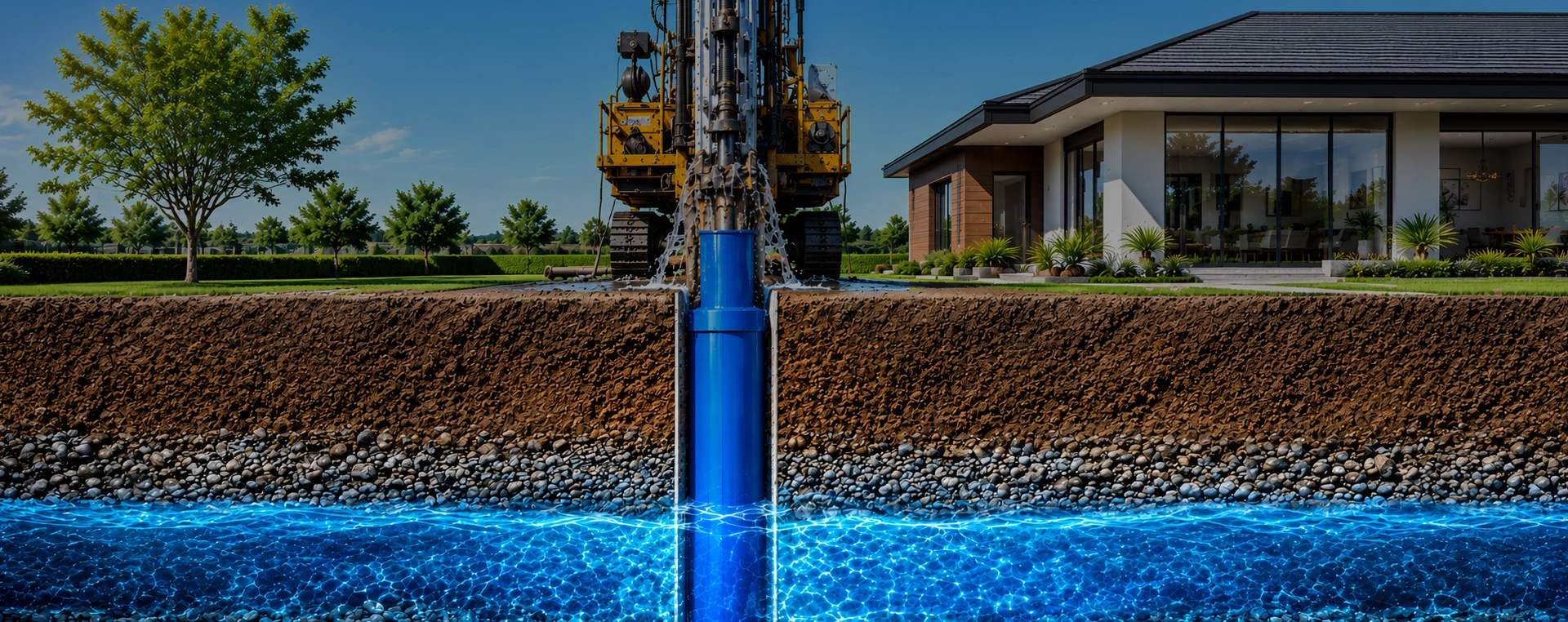
Ensuring borewell stability, durability, and reliable water extraction.
- - 14/07/2026
